
Inconel Machining Services
Inconel machining services for UK aerospace, energy and chemical processing customers, from our ISO 9001 certified workshop in Leighton Buzzard. We CNC mill and turn Inconel 625 and 718 to ±0.01mm, from one-off prototypes to production batches, with full material traceability on every part.
Inconel Machining Overview
Inconel machining is one of the most demanding disciplines in UK subcontract engineering, and it is a core specialism at Clarent Precision. Inconel is a family of nickel-chromium super alloys engineered for extreme environments, maintaining mechanical strength at temperatures where most metals would fail, which makes it indispensable in gas turbines, jet engines, nuclear reactors and petrochemical processing. Inconel also offers exceptional resistance to oxidation and corrosion in the most aggressive chemical environments.
Inconel is widely regarded as one of the most challenging materials to CNC machine. Its rapid work hardening, extreme heat generation at the cutting edge and aggressive tool wear mean that only machinists with genuine super alloy experience can deliver consistent results. Many UK sub-contract machine shops simply will not take on Inconel work.
At Clarent Precision, Inconel machining is a key part of our specialist super alloy capability. We work with Inconel 625, 718 and other grades, delivering components to the tight tolerances demanded by aerospace, energy and chemical processing clients. Our experience, tooling knowledge and cutting strategies allow us to machine Inconel efficiently and reliably.
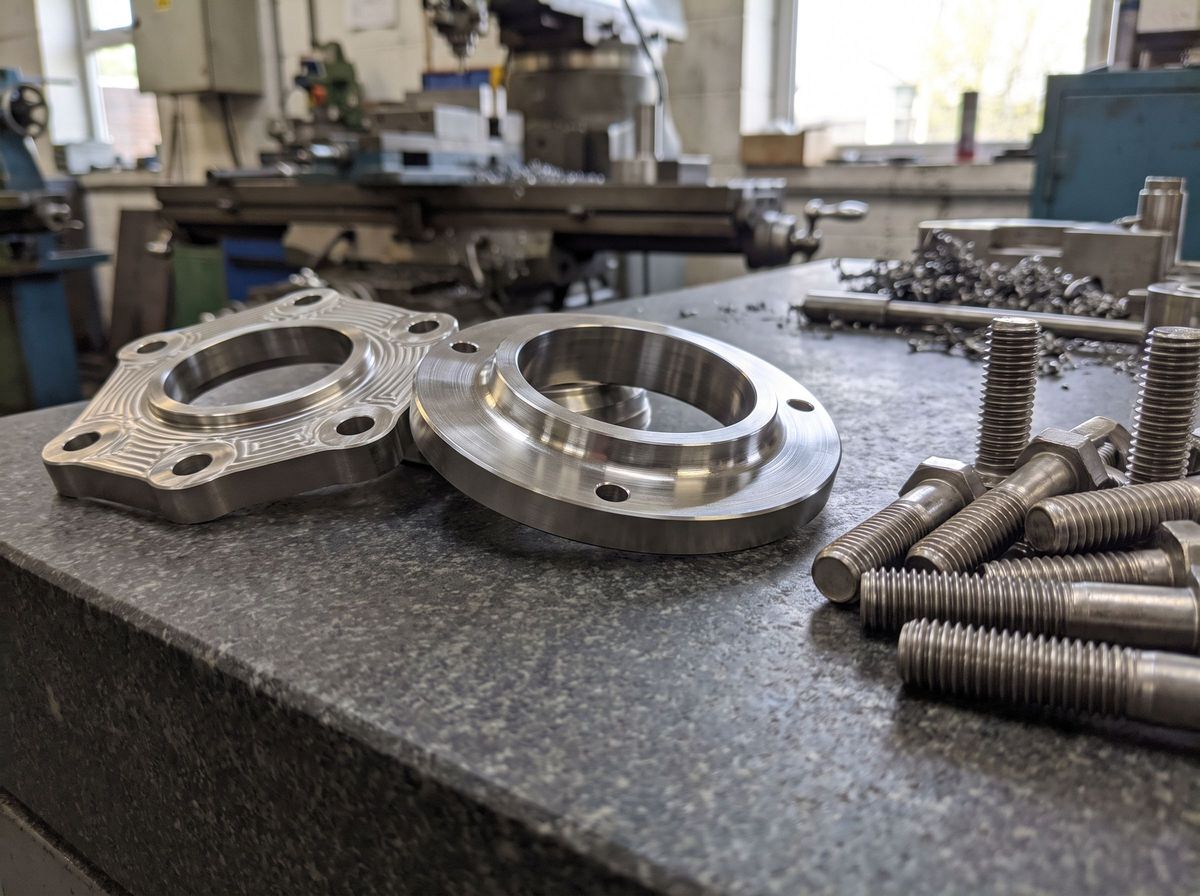
Key Properties of Inconel
Extreme Heat Resistance
Maintains structural integrity at temperatures exceeding 700°C. Inconel 718 retains strength up to 980°C in short-term exposure.
Oxidation Resistant
Forms a stable, protective oxide layer that resists scaling and degradation at elevated temperatures.
High-Temperature Strength
Unlike most metals, Inconel maintains its yield strength and creep resistance at temperatures that would soften standard steels.
Corrosion Resistant
Excellent resistance to a wide range of corrosive media including acids, alkalis and salt water. Ideal for harsh chemical environments.
Fatigue Resistant
Outstanding resistance to fatigue, thermal fatigue and stress-corrosion cracking under extreme cyclic loading conditions.
Pressure Resistant
Maintains integrity under extreme pressure at high temperatures, making it critical for turbine and reactor applications.
Inconel Grades Compared
Choosing the right Inconel grade depends on whether corrosion resistance or high-temperature strength is the priority. The two grades we machine most frequently are 625 and 718. For the full breakdown, read our Inconel 625 vs 718 comparison.
| Grade | Alloy Type | Key Characteristics | Typical Applications |
|---|---|---|---|
| Inconel 625 | Ni-Cr-Mo-Nb, solution strengthened | Outstanding corrosion resistance including chlorides and seawater; good weldability; strength to ~815°C | Chemical processing, marine and subsea, oil & gas, exhaust systems |
| Inconel 718 | Ni-Cr-Fe with Nb, Mo, Ti, Al; age hardened | Very high strength at elevated temperatures; excellent fatigue and creep resistance | Gas turbine discs and blades, aerospace structures and fasteners, downhole tools |
| Other grades | 600, 601, 825 and more | Grade-specific balances of oxidation resistance, acid resistance and formability | Furnace components, heat treatment fixtures, acid processing, available on request |
The Inconel Machining Challenge
Inconel is widely considered one of the hardest materials to CNC machine. The properties that make it invaluable in extreme environments are the same properties that make it punishing on tools and equipment.
- Rapid work hardening: Inconel work hardens extremely quickly during machining. If the tool dwells or rubs rather than cutting cleanly, the surface hardens to the point where subsequent passes become almost impossible.
- Extreme heat generation: Like titanium, Inconel has poor thermal conductivity. Cutting heat concentrates at the tool tip, rapidly degrading even carbide tooling. Temperatures at the cutting edge can exceed 1,200°C.
- Aggressive tool wear: The combination of heat, hardness and abrasive carbide particles in the alloy leads to tool wear rates many times higher than standard steels.
- Built-up edge: Inconel tends to weld itself to the cutting tool, creating a built-up edge that degrades surface finish and dimensional accuracy.
Clarent Precision overcomes these challenges through optimised cutting parameters, high-pressure coolant systems, ceramic and coated carbide tooling, and the experience that comes from regularly machining super alloys. We maintain consistent engagement, avoid tool dwelling and use climb milling strategies to manage work hardening.
Our Inconel Machining Services
- CNC Milling: 3 and 4 axis machining with high-pressure coolant delivery. Sizes up to 762mm x 406mm x 508mm.
- CNC Turning: Live tooling lathes for complete mill-turn operations. Capacity up to Ø279mm x 413mm.
- Batch Sizes: From single prototypes to production batches. Milling runs up to 1,000+, turning up to 10,000.
- Tolerances: Routinely achieving +/- 0.01mm on critical dimensions, verified by CMM inspection.
- Grades: Inconel 625, 718 and others on request.
Applications and Industries
Inconel components are used in the most demanding engineering environments where failure is not an option.
- Gas turbine blades, discs and combustion chambers
- Jet engine exhaust systems and afterburner components
- Nuclear reactor core components
- Oil and gas downhole tools and wellhead equipment
- Chemical processing reactor vessels and heat exchangers
- Motorsport exhaust manifolds and turbocharger components
Post-Production Treatments
Inconel components may require specific post-production treatments depending on the application.
- Heat treatment: Solution annealing and age hardening to achieve specific mechanical properties.
- Passivation: To optimise the protective oxide layer for maximum corrosion resistance.
- Surface grinding: For ultra-tight tolerance requirements on critical sealing faces.
Precision Component Examples
Examples of high-performance components produced at our Leighton Buzzard facility.
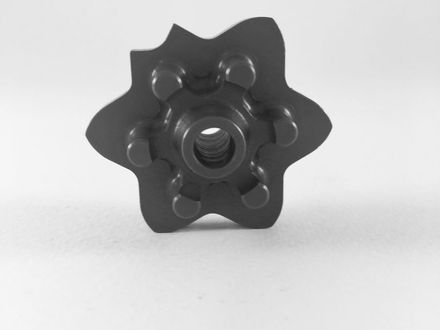
Precision machined engineering component
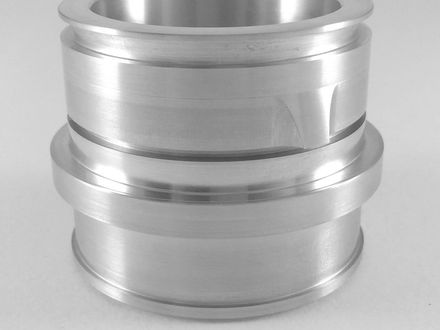
High-performance machined component
Quality Assurance
Inconel components typically serve safety-critical applications where quality documentation is non-negotiable. Our ISO 9001 certified quality system provides full material traceability, Certificates of Conformity, First Article Inspection Reports and CMM dimensional reports. Every component is inspected in our temperature-controlled inspection department.
Our quality systems →Inconel Machining FAQs
What is Inconel?
Inconel is a family of nickel-chromium super alloys developed for use in extreme high-temperature and corrosive environments. The most common grades are Inconel 625 (solid solution strengthened, excellent corrosion resistance) and Inconel 718 (precipitation hardened, higher strength at elevated temperatures). These alloys maintain their mechanical properties at temperatures where standard steels and even stainless steels would fail.
Why is Inconel so hard to machine?
Inconel presents several machining challenges simultaneously. It work hardens rapidly, concentrates extreme heat at the cutting edge due to poor thermal conductivity, causes aggressive tool wear, and tends to weld to the cutting tool. These factors demand specialist tooling, optimised cutting parameters and experienced operators. At Clarent Precision, our team has developed proven strategies for machining Inconel consistently and to tight tolerances.
What is the difference between Inconel 625 and Inconel 718?
Inconel 625 is a solid-solution-strengthened alloy prized for outstanding corrosion resistance, particularly against chlorides and seawater, with good weldability. Inconel 718 is precipitation (age) hardened, giving it significantly higher strength at elevated temperatures, which is why it dominates gas turbine and aerospace structural applications. Choose 625 when corrosion resistance is the priority and 718 when high-temperature mechanical strength matters most.
What Inconel grades do you machine?
We machine all common Inconel grades including 625, 718 and others on request. Inconel 625 is often chosen for its outstanding corrosion resistance, while 718 is preferred where higher mechanical strength at temperature is needed. Contact us with your specific requirements and we will advise on the best approach.
How much does Inconel machining cost?
Inconel is one of the more expensive materials to machine. Raw material prices are significantly higher than stainless steel, cutting speeds are slower and tool consumption is greater. The final cost depends on component geometry, tolerances, grade and batch size. Because we machine Inconel regularly, our proven cutting strategies minimise cycle times and tool wear, keeping costs competitive. Send us your drawings for a fast, accurate quotation.
What industries use Inconel components?
Inconel is used extensively in aerospace (gas turbines, jet engines), energy (nuclear reactors, power generation), oil and gas (downhole tools, wellhead equipment), chemical processing (reactor vessels, heat exchangers) and motorsport (exhaust systems, turbocharger components). Any application involving extreme temperatures, corrosive environments or high mechanical loads is a potential candidate for Inconel.
Need Inconel Components Machined?
Our super alloy expertise means we deliver where others cannot. Send us your drawings for a competitive quote on Inconel machining.