
Prototype & One-Off
CNC Machining
- One-off parts to small batch runs, no minimum order
- Machined in production materials, including super alloys
- Design consultation direct with the directors
- Full inspection report with every prototype
- Scale straight to production runs of 10,000+
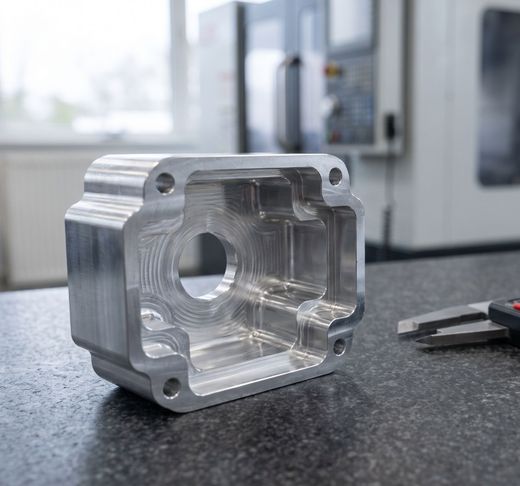
From Concept to Machined Part
Prototype CNC machining for customers across the UK, from a single part proving a concept through to small pre-production batches for validation. One-off replacement parts for machinery that has broken down are welcome too, and there is no minimum order quantity on any of it.
At Clarent Precision, CNC prototyping is not a sideline. It is where many of our longest client relationships began. A single prototype leads to a small batch, which leads to ongoing production. We're set up to support every stage of that.
Unlike online quoting platforms, you speak directly to Paul or John, the directors who founded the company in 2011. They'll review your design, suggest improvements, flag potential machining issues, and give you honest advice on material selection and cost-effective manufacturing approaches.
Every prototype includes an inspection report documenting any issues encountered during manufacture and recommendations for the production version. That report is often as useful as the part itself.
How It Works
From your first enquiry to a finished, inspected part, this is the process.
Consultation
Discuss your requirements with Paul or John directly. We advise on material selection, design-for-manufacture improvements, machining methods and identify any potential issues before we start.
CAD/CAM Programming
We interrogate your 3D models using our CAD/CAM system, verifying all dimensions are correct to specification. Simulations allow us to provide accurate pricing and lead times upfront.
Machining
Your part is machined on our CNC milling and turning centres. We handle everything from basic 2D profiles to complex 3D shapes and complete mill-turn operations with live tooling.
Inspection & Report
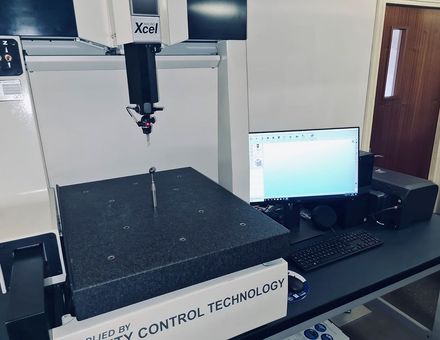
Every prototype is inspected in our temperature-controlled department. We provide a report outlining any issues encountered during manufacture and recommendations for the production version.
Why CNC Machining for Prototypes?
3D printing has its place, but CNC machining gives you a prototype in the actual production material, not a plastic approximation. That means your prototype truly represents how the final part will perform under real-world conditions.
- Production-grade materials
- Machine your prototype in the exact metal or alloy the final part will use: aluminium, stainless steel, titanium, or even Inconel and Hastelloy.
- Tighter tolerances
- CNC machining achieves ±0.01mm tolerances routinely, significantly better than most additive manufacturing processes.
- Isotropic properties
- Material strength is uniform in all directions. Unlike 3D printed parts, which can be weaker along the build axis, CNC machined parts perform identically regardless of orientation.
- Direct path to production
- Your prototype process is the production process. No translation step, no surprises when scaling up. The part you test is representative of the part you'll ship.
Prototype Materials
Machining the prototype in the production material is the whole point, so our range covers everything from free-cutting brass to nickel super alloys that most prototype suppliers will not quote.
Mild steel, copper and other materials on request. If your production part is destined for an exotic alloy, prototype it in the same alloy and the results will actually mean something.
CNC Prototyping Capabilities
We machine prototypes using both our CNC milling and turning centres, and can combine both in a single project.
CNC Milling
3 & 4 axis machining centres. Complex 3D profiles from solid billet. Up to 762 × 406 × 508mm.
→CNC Turning
Live tooling for complete mill-turn operations in a single setup. Up to Ø279 × 413mm.
→Materials
Full range including aluminium, stainless steel, brass, plastics, plus super alloys: Titanium, Inconel, Hastelloy C276, Super Duplex and Nitronic 50.
View all materials →Post-Production
Heat treatment, anodising, plating, painting, grinding, spark & wire erosion through our approved sub-contractor network.
View treatments →How Fast Can We Turn a Prototype Around?
Online platforms advertise next-day parts. They manage it with automated quoting and very large capacity, and for a simple aluminium bracket that model works perfectly well.
Our answer is more honest. Straightforward prototypes in stocked materials are typically one to two weeks. Complex geometry, exotic alloys and parts needing outside finishing take longer, because the bar has to arrive and the process has to be right first time.
Four things genuinely speed a prototype up:
- Send the 3D model (STEP, IGES or Parasolid) with the drawing. Programming can start immediately instead of waiting on clarification.
- Give us the real deadline when you enquire. We schedule around genuine dates, and we will say plainly if one cannot be met rather than accepting it and disappointing you.
- Use a stocked material where the application allows. Exotic alloy bar can add days before cutting even starts.
- Flag the critical features. Knowing which three dimensions actually matter lets us plan machining and inspection around them.
Because you speak to Paul or John rather than a portal, an urgent job gets a straight answer the same day instead of a position in a queue.
What a Prototype Costs
A one-off carries the entire cost of programming, tooling preparation and setup on a single part. That is why prototypes look expensive per piece next to production parts, and why the same component in a batch of 25 costs a fraction of the one-off price.
Beyond quantity, the drivers are material, geometry, tolerances and the number of setups a part needs. Our guide to how CNC machining is priced in the UK breaks all of that down, including the design decisions that quietly add cost.
We quote from CAD/CAM simulation of the actual machining cycle rather than estimating from a photograph of the drawing, and quotes normally come back within 24 to 48 hours.
Example Parts
A selection of precision machined components, many of which started life as prototypes.
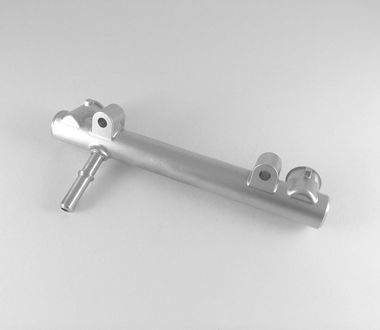
Fuel Rail Prototype
6082 Aluminium3D milled from solid billet
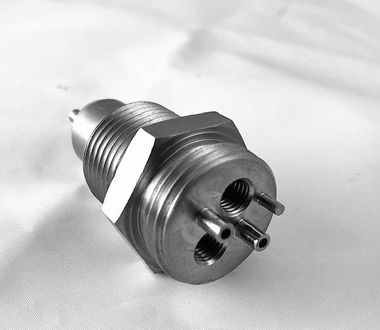
Connector
316 Stainless SteelTurned & milled using live tooling
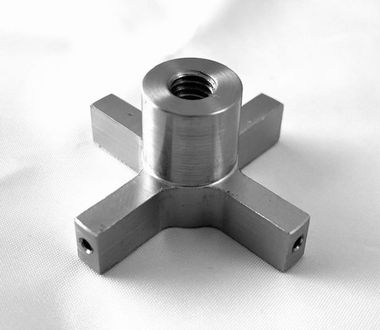
Stirrer
Hastelloy C276Turned & milled with 1.5mm side holes
What Our Clients Say
"In the five years that we have used Clarent Precision we have always been extremely happy with the quality, delivery and customer service they have provided. We view Clarent Precision as a valued part of our supply chain."
"Just wanted to say thank you for parts you have supplied, great job and well done, very pleased with the quality and service you provide."
Frequently Asked Questions
How quickly can you produce a prototype?
Lead times depend on complexity, material and current capacity. Simple prototypes in standard materials can often be turned around in 1-2 weeks. For urgent requirements, talk to us. As a small, family-run operation we can often be more flexible than larger shops.
What files do you need to start?
Ideally, we work from 3D CAD models (STEP, IGES, Parasolid) or 2D drawings (PDF, DXF). If you only have sketches or a sample part, we can work from those too. Our CAD/CAM system allows us to interrogate models and verify all dimensions before machining begins.
Can I order just one part?
Absolutely. We regularly produce single prototype parts. There is no minimum order quantity. We also handle small batches of 2-25 parts for testing and pre-production validation.
Do you offer design advice?
Yes. Our initial consultation includes advice on material selection, economical design to reduce machining time, finishing treatments that may be required, and troubleshooting potential problems. We've been doing this since 2011. We know what works and what doesn't.
How much does a CNC prototype cost?
Costs depend on material, complexity, tolerances and the number of setups required. We provide accurate quotes using CAD/CAM simulation before any machining starts. Contact us with your drawings or models and we'll provide a detailed quotation, typically within 24-48 hours.
Can you produce the part in the final production material?
Yes. Unlike 3D printing, CNC machining produces parts from the actual production material, giving you a prototype that truly represents how the final part will perform. We machine everything from aluminium and stainless steel through to super alloys like Inconel, Titanium and Hastelloy C276.
Where can I find prototype machining services in the UK?
Clarent Precision machines prototypes for customers across the whole of the UK from our ISO 9001 certified facility in Leighton Buzzard, Bedfordshire. Work arrives by email as drawings or 3D models and finished parts go back out by courier, so location is rarely a constraint. Customers within reach of Milton Keynes, Luton, Bedford and the wider South East are welcome to visit the workshop and discuss the job at the machine.
Can you machine prototypes in exotic alloys?
Yes, and it is one of the reasons customers come to us for prototype work. Alongside aluminium, stainless steel and engineering plastics we machine Inconel, Hastelloy C276, Titanium, Super Duplex and Nitronic 50. Many prototype suppliers and online platforms will not quote these materials at all, which matters when the production part has to be made from one of them.
What happens after the prototype?
We can scale directly from prototype to production runs of up to 10,000+ parts. We also offer stockholding for repeat orders, assembly services, and post-production treatments, so you have a single supplier from concept through to finished product.
Have a Prototype in Mind?
Send us your drawings, 3D models, or even a sketch. We'll review your design and provide a detailed quote with lead time, typically within 24-48 hours.