
Hastelloy CNC Machining
Hastelloy machining for UK chemical, pharmaceutical and process plant customers, with proven C276 experience and C22, B2 and X machined on request. We mill and turn Hastelloy parts to ±0.01mm from our ISO 9001 workshop in Leighton Buzzard, with full material traceability.
Hastelloy Machining Overview
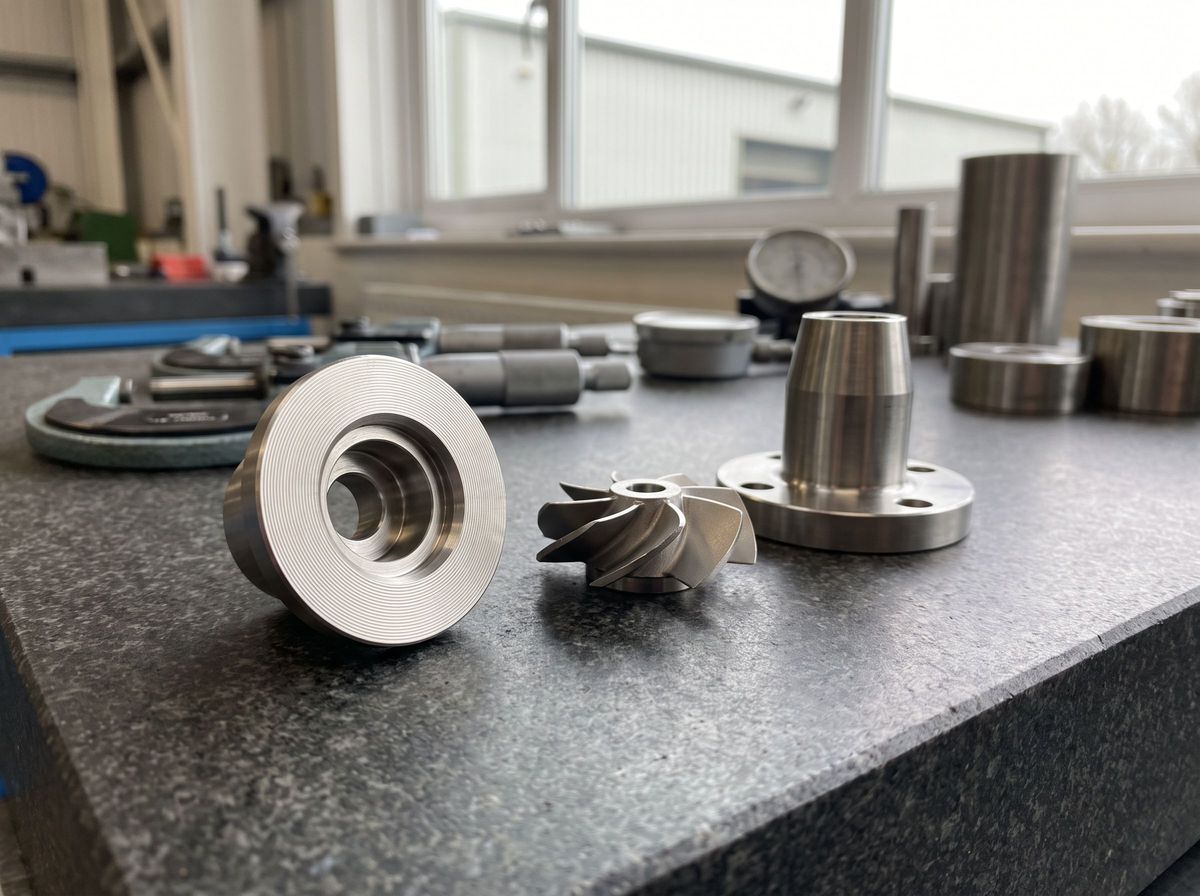
Hastelloy machining demands specialist knowledge that few UK subcontract machine shops possess, and it is a proven capability at Clarent Precision. Hastelloy is a family of nickel-based super alloys renowned for their exceptional resistance to chemical corrosion. Where other materials would rapidly degrade in contact with aggressive acids, chlorides and oxidising environments, Hastelloy maintains its structural integrity and mechanical properties. This makes it the material of choice for the most demanding chemical processing, pharmaceutical and pollution control applications.
Like other nickel-based super alloys, Hastelloy presents significant machining challenges. Its tendency to work harden, combined with high strength and poor thermal conductivity, means that specialist knowledge and equipment are essential for producing quality components. Many UK machine shops lack the experience to work with Hastelloy reliably.
At Clarent Precision, we have proven experience machining Hastelloy C276 and other grades. Our portfolio includes components such as chemical processing stirrers in C276 Hastelloy, demonstrating our practical capability with this demanding material. We also machine C22, B2 and X grades as required.
Key Properties of Hastelloy
Superior Corrosion Resistance
Outstanding resistance to pitting, crevice corrosion and stress corrosion cracking in the most aggressive chemical environments.
Chemical Resistance
Resists attack from hydrochloric acid, sulphuric acid, phosphoric acid, acetic acid and many other corrosive chemicals.
Heat Resistant
Maintains strength and corrosion resistance at elevated temperatures up to 675°C for C276 and higher for other grades.
Maintains Ductility
Retains excellent ductility and toughness even after prolonged exposure to high temperatures and corrosive media.
Oxidation Resistant
Excellent resistance to oxidising and reducing environments, giving versatility across a wide range of chemical processes.
Weldable
Can be welded without post-weld heat treatment in most cases, allowing complex fabricated and machined assemblies.
Hastelloy Grades Compared
Each Hastelloy grade is optimised for a different corrosion profile. C276 is our most frequently machined grade, with portfolio-proven experience, and we machine C22, B2 and X as required.
| Grade | Alloy Type | Key Characteristics | Typical Applications |
|---|---|---|---|
| C276 | Ni-Mo-Cr | The most versatile grade; resists pitting, crevice corrosion and stress corrosion cracking in both oxidising and reducing media | Chemical processing stirrers and agitators, pharmaceutical equipment, flue gas desulphurisation |
| C22 | Ni-Cr-Mo-W | Higher chromium than C276; superior performance in oxidising acids and localised corrosion | Mixed or unpredictable process chemistry, waste treatment, pickling operations |
| B2 / B3 | Ni-Mo | Exceptional resistance to hydrochloric acid at all concentrations and temperatures; best in reducing environments | Hydrochloric and sulphuric acid processing, reactor components |
| X | Ni-Cr-Fe-Mo | Combines corrosion resistance with high-temperature strength and oxidation resistance | Gas turbine combustion zone components, furnace and heat treatment applications |
The Hastelloy Machining Challenge
Hastelloy shares many of the machining challenges common to nickel-based super alloys. Understanding and managing these is essential for producing quality components.
- Work hardening: Hastelloy work hardens rapidly during machining. Consistent tool engagement and avoiding rubbing or dwelling is critical to prevent the surface from becoming unmachinable.
- Heat concentration: Poor thermal conductivity means cutting heat builds up at the tool tip, accelerating wear and potentially affecting surface integrity.
- Tool wear: The combination of hardness, heat and abrasive carbide particles in the alloy leads to rapid tool degradation. Correct tool selection and cutting parameters are essential.
- Surface finish: Achieving a good surface finish on Hastelloy requires sharp tooling, optimised speeds and feeds, and effective coolant delivery.
Our approach to Hastelloy machining involves specialist carbide and coated tooling, optimised cutting strategies, high-pressure coolant and the practical experience that comes from regularly working with nickel-based super alloys. For the detail, read our guide to machining Hastelloy: tooling and coolant.
Our Hastelloy Machining Capabilities
- CNC Milling: 3 and 4 axis machining with high-pressure coolant. Sizes up to 762mm x 406mm x 508mm.
- CNC Turning: Live tooling lathes for complete mill-turn operations. Capacity up to Ø279mm x 413mm.
- Batch Sizes: From single prototypes to production batches. Milling runs up to 1,000+, turning up to 10,000.
- Tolerances: Routinely achieving +/- 0.01mm on critical dimensions, verified by CMM inspection.
- Grades: C276 (confirmed portfolio experience), C22, B2, X and others on request.
Hastelloy Turned Parts
Hastelloy turned parts make up most of our work in this alloy: stirrer shafts, valve seats and stems, nozzles, bushes and threaded fittings for chemical and pharmaceutical plant. Turning suits Hastelloy well. A continuous, steady cut keeps the tool working below the hardened layer, where interrupted milling cuts are more likely to rub and harden the surface further.
Our live-tooling lathes finish cross holes, flats and slots in the same setup. Our C276 stirrer, with its 1.5mm side holes, was turned and milled without being re-clamped. Capacity is Ø279mm by 413mm, from single replacement parts to repeat batches.
Applications and Industries
Hastelloy components are relied upon wherever aggressive chemicals and high temperatures combine.
- Chemical processing reactor vessels, agitators and stirrers
- Pollution control scrubbers and stack liners
- Waste treatment equipment
- Pharmaceutical processing equipment
- Petrochemical heat exchangers and piping components
- Flue gas desulphurisation systems
Post-Production Treatments
Hastelloy components may require specific treatments depending on the application and operating environment.
- Heat treatment: Solution annealing to optimise corrosion resistance and mechanical properties.
- Passivation: Chemical treatment to enhance the protective surface layer.
- Surface grinding: For precision sealing faces and critical tolerance requirements.
Hastelloy Component Examples
Examples of Hastelloy components produced at our Leighton Buzzard facility.
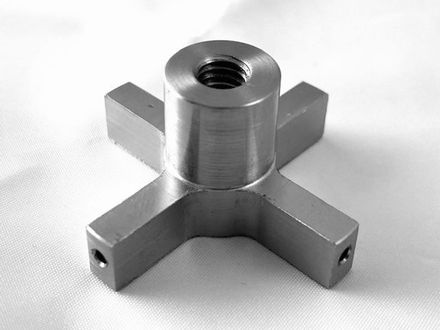
Hastelloy C276 chemical processing stirrer
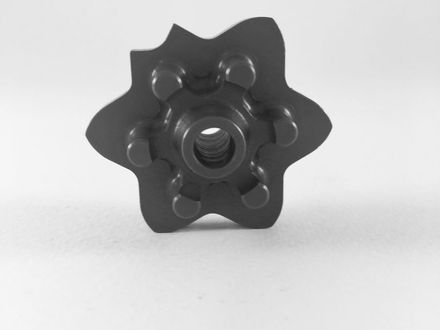
Precision machined engineering component
Quality Assurance
Hastelloy components are typically used in safety-critical and process-critical applications where quality documentation is essential. Our ISO 9001 certified quality system provides full material traceability, Certificates of Conformity and detailed dimensional inspection reports. Every component is inspected in our temperature-controlled inspection department using CMM and precision hand tools.
Our quality systems →Hastelloy Machining FAQs
What is Hastelloy C276?
Hastelloy C276 is a nickel-molybdenum-chromium super alloy with outstanding resistance to a wide range of chemical environments. It resists pitting, crevice corrosion and stress corrosion cracking in aggressive media including hydrochloric acid, sulphuric acid and chloride-containing solutions. It is the most versatile of the Hastelloy family and is widely used in chemical processing, pollution control and pharmaceutical applications.
What is the difference between Hastelloy and Inconel?
Both are nickel-based super alloys, but they are optimised for different conditions. Hastelloy is primarily designed for maximum corrosion resistance in aggressive chemical environments, while Inconel is optimised for maintaining strength at extreme high temperatures. In simple terms, choose Hastelloy when the primary concern is chemical attack, and Inconel when the primary concern is high-temperature mechanical performance.
What is the difference between Hastelloy C276 and C22?
C276 is the general-purpose workhorse of the family, with excellent resistance across both oxidising and reducing chemical environments. C22 contains more chromium, giving it better performance in oxidising acids and superior resistance to localised pitting and crevice corrosion. C22 is often specified for mixed or unpredictable process chemistry, while C276 remains the default choice for most chemical processing applications.
Is Hastelloy magnetic?
No. Hastelloy grades are essentially non-magnetic. As nickel-chromium-molybdenum alloys with an austenitic structure, they retain very low magnetic permeability even after machining and welding. This, combined with their corrosion resistance, makes them suitable for applications where magnetic interference must be avoided.
What applications use Hastelloy?
Hastelloy is used extensively in chemical processing (reactor vessels, agitators, heat exchangers), pollution control (scrubbers, stack liners), pharmaceutical processing, waste treatment, petrochemical operations and flue gas desulphurisation. Any application involving exposure to aggressive acids, chlorides or mixed corrosive environments is a strong candidate for Hastelloy.
How much does Hastelloy CNC machining cost?
Hastelloy is one of the more expensive materials to machine due to high raw material costs, slow cutting speeds and increased tool consumption. The exact cost depends on component complexity, tolerances, batch size and the specific grade required. Send us your drawings for an accurate, competitive quotation. Our experience with Hastelloy allows us to optimise cutting strategies and minimise waste, keeping costs as low as possible.
Is Hastelloy magnetic?
No. Hastelloy C276, C22 and X are austenitic nickel alloys and are effectively non-magnetic, with a magnetic permeability below 1.001 at room temperature. Cold working during machining does not change that in any practical sense, so a magnet will not pick up a Hastelloy part. That makes it a safe choice near sensors, instrumentation and analytical equipment where a magnetic component would interfere.
Need Hastelloy Components Machined?
Proven C276 experience and deep super alloy expertise. Send us your drawings for a competitive quote.