
Super Duplex Stainless Steel Machining
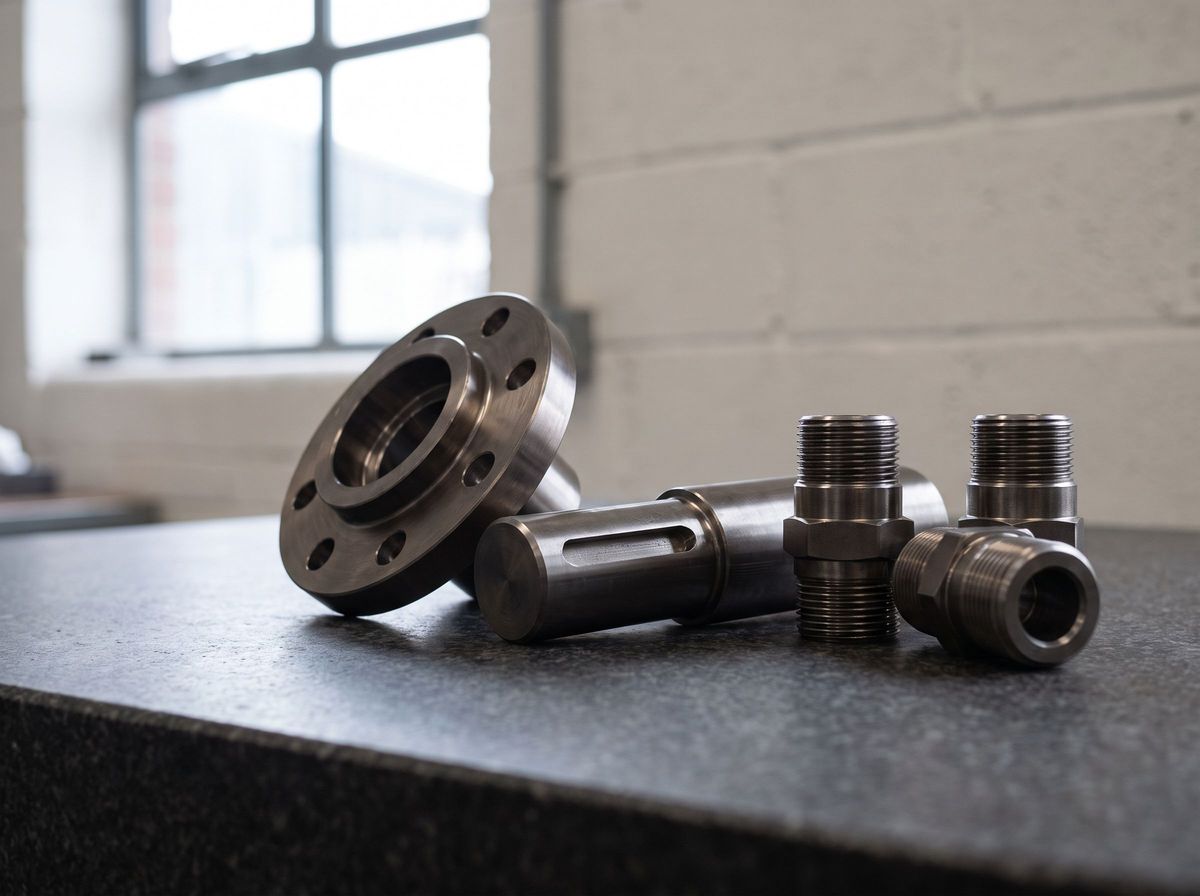
Super duplex machining and CNC turning for UK offshore, subsea and marine customers in SAF 2507 (UNS S32750) and Zeron 100. We machine shafts, flanges, valve parts and hydraulic fittings from solid bar, with full material traceability on every batch.
Super Duplex Machining Overview
Super duplex stainless steels combine the best properties of austenitic and ferritic stainless steels in a single material. The result is a stainless steel with roughly twice the yield strength of standard austenitic grades like 316, combined with outstanding resistance to pitting corrosion, crevice corrosion and stress corrosion cracking. This unique combination makes super duplex the material of choice for offshore, subsea and marine applications.
Super duplex grades such as SAF 2507 (UNS S32750) and Zeron 100 are widely specified for oil and gas platforms, subsea equipment, desalination plants and chemical processing where exposure to chlorides and seawater is unavoidable. The higher strength also allows thinner wall sections, reducing weight and material costs.
At Clarent Precision, super duplex machining is part of our broader specialist stainless steel and super alloy capability. The material's high strength and work hardening tendency make it more demanding to machine than standard stainless steels, but our team has the experience and equipment to deliver consistent, high-quality results.
Key Properties of Super Duplex
High Strength
Approximately twice the yield strength of standard 316 austenitic stainless steel, allowing lighter-weight designs.
Pitting Resistance
PREN values above 40 provide outstanding resistance to pitting and crevice corrosion in chloride environments.
Stress Corrosion Cracking Resistance
Far superior to austenitic grades in resisting chloride-induced stress corrosion cracking, a common failure mode in offshore environments.
Corrosion Resistant
Excellent general corrosion resistance in seawater, brackish water, acids and a wide range of industrial chemicals.
Erosion Resistant
The high hardness and strength of super duplex provides good resistance to erosion and cavitation in high-flow environments.
Cost Effective vs. Super Alloys
Offers much of the corrosion performance of nickel alloys at a significantly lower material cost in many applications.
The Super Duplex Machining Challenge
Super duplex is significantly more difficult to machine than standard austenitic stainless steels. Its high strength, work hardening tendency and abrasive nature present distinct challenges.
- High cutting forces: The elevated yield strength of super duplex generates higher cutting forces than 316 or 304, requiring rigid setups and robust tooling.
- Work hardening: Like all duplex grades, super duplex work hardens during machining. Consistent engagement and avoiding tool dwelling are essential to prevent the surface from hardening beyond the cutting tool's capability.
- Tool wear: The higher hardness and strength accelerate tool wear compared to austenitic grades. Correct tool grade selection and cutting parameters are critical.
- Heat generation: Poor thermal conductivity concentrates heat at the cutting zone, requiring effective coolant delivery and appropriate speeds and feeds.
Our experience with super duplex, combined with robust CNC equipment, high-pressure coolant and optimised cutting strategies, allows us to machine this demanding material consistently and to tight tolerances.
Our Super Duplex Machining Capabilities
- CNC Milling: 3 and 4 axis machining centres. Sizes up to 762mm x 406mm x 508mm.
- CNC Turning: Live tooling lathes for complete mill-turn operations. Capacity up to Ø279mm x 413mm.
- Batch Sizes: From single prototypes to production batches. Milling runs up to 1,000+, turning up to 10,000.
- Tolerances: Routinely achieving +/- 0.01mm on critical dimensions, verified by CMM inspection.
- Grades: SAF 2507, Zeron 100 and other super duplex grades on request.
Super Duplex Turning for Marine and Subsea
Most super duplex work that reaches us is turned rather than milled, because the parts are cylindrical: shafts, sleeves, valve internals, connector bodies and pressure fittings destined for seawater service.
Marine and subsea duty is where super duplex earns its cost. Seawater combines chlorides, oxygen and pressure, and the alloy resists the pitting and crevice corrosion that would eventually attack 316 while allowing thinner, lighter sections thanks to its yield strength.
- Offshore oil and gas: platform equipment, wellhead components and pressure-containing fittings
- Subsea: manifolds, connectors, valve bodies and hydraulic couplings
- Marine: propeller shafts, pump components, sleeves and bushes
- Desalination: heat exchanger and piping components in constant seawater contact
- Chemical processing: vessels, heat exchangers and piping in aggressive media
- Pulp and paper: processing equipment exposed to bleaching chemistry
Passivation after machining matters more on these parts than most, since it restores the protective film across freshly cut surfaces. We handle that through our approved finishing network as part of the job.
Post-Production Treatments
Super duplex components may require specific post-production treatments for optimal performance.
- Solution annealing: To restore the optimal austenite-ferrite phase balance after machining.
- Passivation: Chemical treatment to maximise the protective chromium oxide layer.
- Surface grinding: For critical sealing faces and tight tolerance requirements.
Precision Component Examples
Examples of high-performance components produced at our Leighton Buzzard facility.
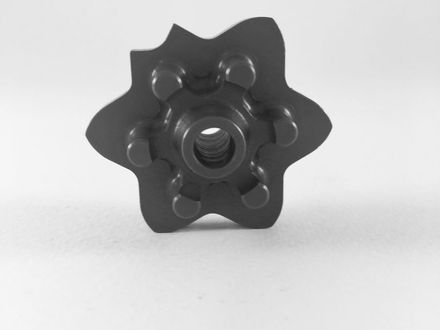
Precision machined engineering component
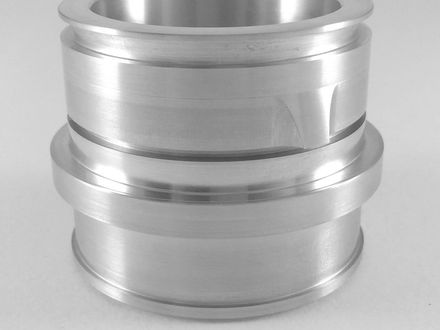
High-performance machined component
Quality Assurance
Super duplex components are typically used in safety-critical offshore and subsea applications where quality documentation is mandatory. Our ISO 9001 certified quality system provides full material traceability, Certificates of Conformity, First Article Inspection Reports and CMM dimensional reports. Every component is inspected in our temperature-controlled inspection department.
Our quality systems →Super Duplex Machining FAQs
What is super duplex stainless steel?
Super duplex is a high-performance stainless steel with a mixed austenitic-ferritic microstructure. This dual-phase structure gives it roughly twice the yield strength of standard austenitic grades like 316, combined with outstanding resistance to pitting, crevice corrosion and stress corrosion cracking. Common grades include SAF 2507 and Zeron 100. It is widely used in offshore, subsea and marine applications.
What is the difference between duplex and super duplex?
Both are dual-phase stainless steels, but super duplex has a higher alloy content, particularly chromium, molybdenum and nitrogen, which gives it superior corrosion resistance and strength. Super duplex grades have a PREN (Pitting Resistance Equivalent Number) above 40, compared to around 30 to 35 for standard duplex. This makes super duplex the preferred choice for the most demanding chloride environments such as offshore platforms and subsea equipment.
Why is super duplex used for marine and subsea components?
Seawater is the hardest test a stainless steel faces, combining chlorides, oxygen and often elevated temperature. Super duplex resists the pitting and crevice corrosion that would attack 316, while its high yield strength allows thinner, lighter sections in pressure-containing parts. That combination is why subsea manifolds, valve bodies, propeller shafts and pump components are so often specified in 2507 or Zeron 100.
What are the main applications for super duplex?
Super duplex is widely used in offshore oil and gas (platform equipment, subsea manifolds, valve bodies), marine (propeller shafts, pump components), desalination (heat exchangers, piping), chemical processing (vessels, heat exchangers) and pulp and paper processing. Any application requiring high strength combined with chloride corrosion resistance is a strong candidate.
Is super duplex difficult to CNC machine?
Yes, super duplex is significantly more challenging to machine than standard austenitic stainless steels. Its high strength generates higher cutting forces, it work hardens readily and its poor thermal conductivity concentrates heat at the cutting edge. These factors require specialist tooling, optimised cutting parameters and experienced operators. At Clarent Precision, our super alloy expertise extends to super duplex and we deliver consistent results.
Need Super Duplex Components Machined?
Specialist stainless steel and super alloy capability for the most demanding applications. Send us your drawings.