
Plastic & Engineering Polymer CNC Machining
Precision plastic machining for UK engineers who need polymer parts held to tight tolerances, in PEEK, Delrin, Nylon, PTFE and polycarbonate. We CNC mill and turn plastic components from a single prototype to production batches, on the same machines and under the same ISO 9001 controls as our metal work.
Plastic Machining Overview
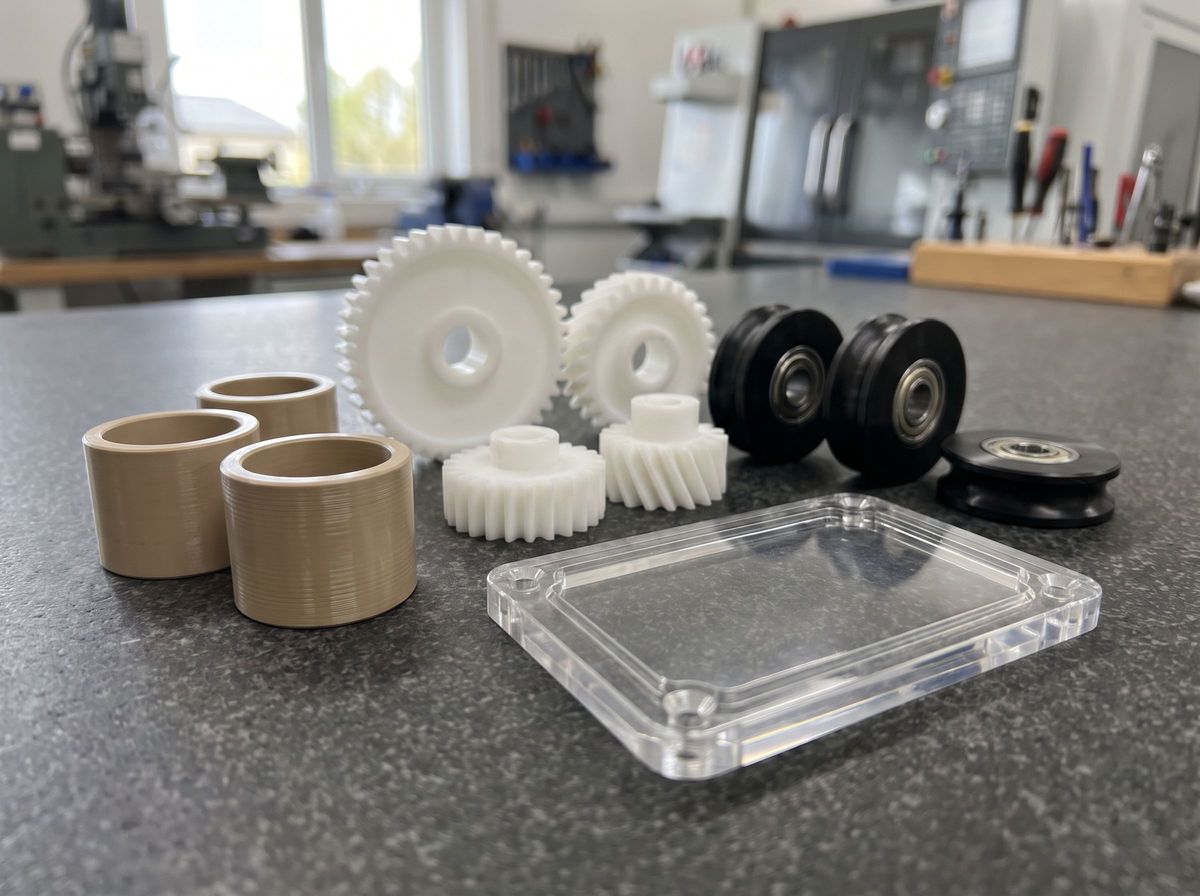
CNC machining is often the best method for producing precision plastic and engineering polymer components, particularly for prototypes, low-to-medium volume production and applications requiring tight tolerances that injection moulding cannot achieve. Machined plastics offer a vast range of mechanical, thermal and chemical properties, allowing engineers to select exactly the right material for each application.
From high-performance PEEK for aerospace and medical applications through to cost-effective Nylon and Delrin for general engineering, Clarent Precision machines the full spectrum of engineering polymers. Our CNC milling and turning facility handles everything from single prototypes to production batches.
Plastic machining requires different considerations to metal cutting. Tool selection, speeds, feeds and clamping strategies all need to account for the material's lower rigidity, heat sensitivity and tendency to deform. Our team understands these nuances and delivers clean, dimensionally accurate plastic components across all material types.
Key Properties of Engineering Plastics
Lightweight
Engineering plastics are typically 5-7 times lighter than steel, offering significant weight savings for applications where mass matters.
Chemical Resistant
Many engineering polymers offer excellent resistance to chemicals, solvents and fuels. PTFE and PEEK are particularly outstanding in this area.
Electrical Insulation
Plastics are natural electrical insulators, making them essential for electrical and electronic applications.
Wide Property Range
From soft, flexible Nylon to ultra-rigid PEEK, engineering plastics span a vast range of mechanical and thermal properties.
Cost Effective Prototyping
CNC machined plastic prototypes can be produced quickly without tooling investment, ideal for design validation and testing.
Low Friction
Materials like PTFE, Delrin and UHMWPE have very low coefficients of friction, ideal for bearings, bushings and sliding surfaces.
Materials We Machine
We work with the full range of engineering polymers. Some of the most commonly requested materials include the following.
- PEEK: High-performance polymer with exceptional temperature resistance (up to 260°C continuous), chemical resistance and mechanical strength. Used in aerospace, medical and oil and gas applications.
- Delrin / Acetal (POM): Excellent dimensional stability, low friction and good machinability. Widely used for gears, bushings and precision mechanical components. See our dedicated Delrin machining page.
- Nylon (PA6, PA66): Good strength, toughness and wear resistance. Cost effective for general engineering applications including bearings and structural components.
- PTFE (Teflon): Outstanding chemical resistance, lowest coefficient of friction of any solid material. Used for seals, gaskets and chemical processing components.
- Polycarbonate: Excellent impact resistance and optical clarity. Used for guards, covers and transparent components.
- Acrylic (PMMA): Optical clarity combined with good weather resistance. Used for displays, light guides and transparent fixtures.
- UHMWPE: Extremely high wear resistance and low friction. Used for bearings, guides and wear strips.
- PVC: Good chemical resistance and electrical insulation. Cost effective for chemical processing and electrical applications.
Our Plastic Machining Capabilities
- CNC Milling: 3 and 4 axis machining centres. Sizes up to 762mm x 406mm x 508mm. Specialist tooling and parameters for plastic materials.
- CNC Turning: Live tooling lathes for complete mill-turn operations. Capacity up to Ø279mm x 413mm.
- Batch Sizes: From single prototypes to production batches. Milling runs up to 1,000+, turning up to 10,000.
- Tolerances: Typically +/- 0.05mm for most plastics, tighter tolerances achievable on dimensionally stable materials like PEEK and Delrin.
- Surface Finish: Excellent as-machined finishes achievable on most engineering plastics.
High Precision Plastic Turning
Most of our polymer work ends up on a lathe: bushes, spacers, rollers, seals, insulating sleeves and valve seats. Plastics move far more than metals as they warm up, so holding a tight tolerance on a turned plastic part comes down to sharp tooling, light finishing cuts and letting the part settle at room temperature before it is measured.
We hold ±0.02mm on turned Delrin and PEEK as routine. Nylon absorbs moisture and grows in service, so we agree realistic tolerances for it at quote stage instead of promising numbers the part cannot keep once fitted. Our live-tooling lathes finish cross holes, flats and slots in the same setup.
Applications and Industries
CNC machined plastic components serve a wide range of industries and applications.
- Medical device components and surgical guides
- Food processing wear parts and bushings
- Electrical insulators and terminal blocks
- Bearings, bushings and wear components
- Prototype parts for design validation
- Chemical processing seals and gaskets
Post-Production Treatments
Depending on the material and application, various post-production options are available.
- Polishing: For optical-grade finishes on polycarbonate and acrylic components.
- Vapour polishing: For achieving crystal-clear finishes on transparent plastics.
- Painting and printing: For branding, labelling or colour coding requirements.
- Annealing: Stress relief for dimensionally critical components.
Precision Component Examples
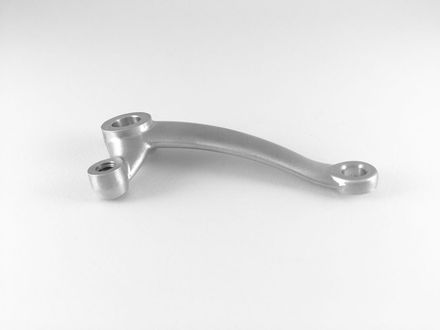
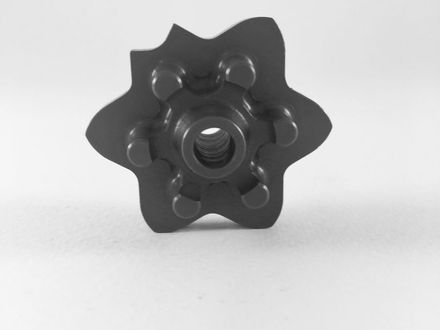
Examples of precision components produced at our Leighton Buzzard facility.
Precision milled component
Precision machined component
Quality Assurance
Every plastic component is inspected to ensure it meets your specification. Our ISO 9001 certified quality management system provides full traceability and documentation. Material certificates, Certificates of Conformity and dimensional inspection reports are available as standard.
Our quality systems →Frequently Asked Questions
What plastics can be CNC machined?
Most engineering plastics can be CNC machined, including PEEK, Delrin (Acetal/POM), Nylon (PA6, PA66), PTFE, Polycarbonate, Acrylic (PMMA), UHMWPE and PVC. Some very soft or flexible plastics are more challenging due to deflection during cutting, but the majority of engineering-grade polymers machine well. Contact us with your specific material requirement and we can advise.
What is the difference between PEEK and Delrin?
PEEK is a high-performance semi-crystalline polymer that offers exceptional temperature resistance (continuous use up to 260°C), outstanding chemical resistance and high mechanical strength. Delrin (Acetal/POM) is a more cost-effective polymer with excellent dimensional stability, low friction and good machinability, but with lower temperature resistance (around 100°C continuous). Choose PEEK for extreme environments and Delrin for general-purpose precision components.
What tolerances can you achieve on plastic components?
Typical tolerances for most engineering plastics are +/- 0.05mm. Dimensionally stable materials like PEEK and Delrin can often be held tighter, approaching +/- 0.02mm on critical features. Plastics are more sensitive to temperature changes and clamping forces than metals, so achieving very tight tolerances requires careful consideration of material behaviour. We are happy to discuss specific tolerance requirements for your application.
What is the best plastic for prototyping?
The best plastic for prototyping depends on the application. Delrin (Acetal) is an excellent general-purpose choice due to its good machinability, dimensional stability and reasonable cost. Nylon is another popular option for functional prototypes. For prototypes that need to replicate the performance of the final production material, we recommend machining the actual intended material. CNC machining is ideal for prototyping as it requires no tooling investment and parts can be produced quickly.
Need Plastic Components Machined?
From PEEK prototypes to production runs in Delrin, Nylon and beyond. Send us your drawings for a fast quote.