
Titanium CNC Machining
Titanium machining for UK aerospace, medical and motorsport customers in Grade 5 (Ti-6Al-4V), Grade 2 and Grade 23. We CNC mill and turn titanium parts from one-off prototypes to production batches, with full material traceability and CMM inspection on critical dimensions.
Titanium Machining Overview
Titanium is one of the most sought-after materials in high-performance engineering. Its exceptional strength-to-weight ratio, outstanding corrosion resistance and biocompatibility make it essential for aerospace, medical, marine and motorsport applications. Titanium is roughly 45% lighter than steel while offering comparable strength, which is why it dominates in weight-critical applications.
However, titanium is also one of the most challenging materials to CNC machine. Its low thermal conductivity causes heat to concentrate at the cutting edge, accelerating tool wear. It also has a tendency to work harden during machining if not handled correctly. These characteristics mean that many sub-contract machinists either refuse titanium work or deliver substandard results.
At Clarent Precision, titanium machining is a core part of our capability. Our team has the tooling knowledge, cutting strategies and experience to machine titanium consistently and to tight tolerances. We work with the full range of titanium grades including Grade 5 (Ti-6Al-4V), Grade 2, Grade 23 and others as required. Prototype parts are machined in the same grade as production, so our prototype CNC machining service suits titanium development work well.
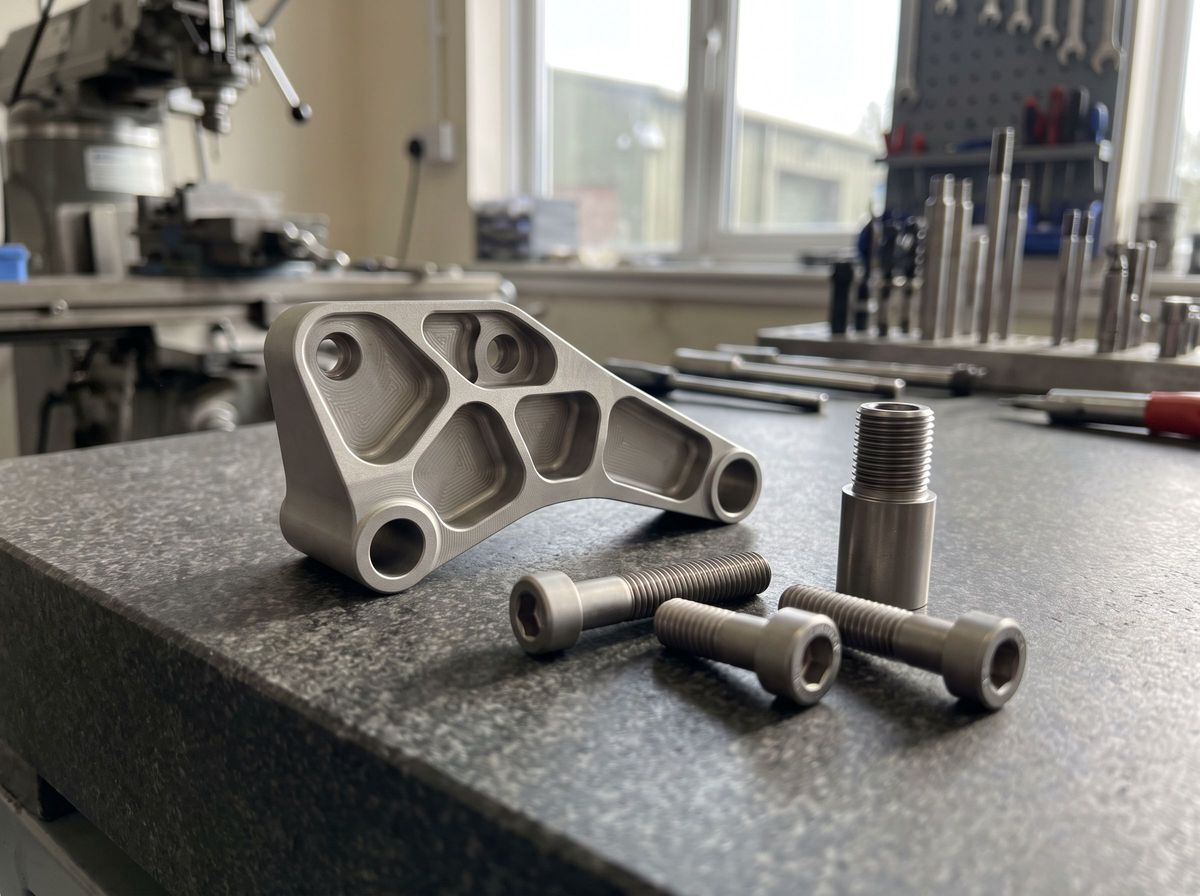
Key Properties of Titanium
Strength-to-Weight Ratio
One of the highest strength-to-weight ratios of any metal. 45% lighter than steel with comparable tensile strength.
Corrosion Resistant
Outstanding resistance to seawater, chlorides and many industrial chemicals. Outperforms stainless steel in harsh environments.
Biocompatible
Widely used in medical implants and surgical devices. The human body does not reject titanium, making it ideal for long-term implantation.
Heat Resistant
Maintains mechanical strength at temperatures up to 600°C. Critical for aerospace engine and airframe applications.
Lightweight
At 4.5 g/cm³, titanium is significantly lighter than steel (7.8 g/cm³) while maintaining exceptional structural integrity.
Fatigue Resistant
Excellent resistance to fatigue and crack propagation, making it ideal for components subjected to cyclic loading.
The Titanium Machining Challenge
Titanium's desirable mechanical properties are precisely what make it difficult to machine. Understanding these challenges is key to delivering quality titanium components.
- Heat concentration: Titanium's low thermal conductivity means cutting heat stays at the tool tip rather than dissipating through the workpiece. This accelerates tool wear and can compromise surface finish if not managed correctly.
- Work hardening: If cutting parameters are not optimised, titanium rapidly work hardens at the surface, making subsequent passes increasingly difficult and potentially damaging tools.
- Tool wear: The abrasive nature of titanium combined with heat concentration leads to rapid tool degradation. Correct tool selection, coatings and cutting speeds are essential.
- Springback: Titanium's elasticity can cause thin-walled sections to deflect during machining, requiring careful fixturing and cutting strategies.
At Clarent Precision, we address these challenges through optimised cutting parameters, high-pressure coolant delivery, specialist tooling and years of hands-on experience. The result is consistent, high-quality titanium components delivered to aerospace-grade tolerances.
Our Titanium Machining Services
- CNC Milling: 3 and 4 axis machining centres with high-pressure coolant for optimal heat management. Sizes up to 762mm x 406mm x 508mm.
- CNC Turning: Live tooling lathes for complete mill-turn operations. Capacity up to Ø279mm x 413mm.
- Batch Sizes: From single aerospace prototypes to production runs. Milling batches up to 1,000+, turning up to 10,000.
- Tolerances: Routinely achieving +/- 0.01mm on critical dimensions, verified by CMM inspection.
- Grades: Grade 5 (Ti-6Al-4V), Grade 2, Grade 23 and others on request.
Applications and Industries
Titanium components machined by Clarent Precision serve the most demanding engineering applications.
- Aerospace structural components and fasteners
- Aircraft engine parts and compressor blades
- Medical implants and surgical instruments
- Marine hardware and subsea components
- Motorsport lightweight performance parts
- Defence and military applications
Post-Production Treatments
We offer relevant finishing options for titanium through our approved sub-contractor network.
- Anodising: Type II and Type III for enhanced wear resistance and colour coding.
- Passivation: To enhance the natural oxide layer and improve corrosion resistance.
- Shot peening: To improve fatigue life for aerospace-critical components.
- PVD coatings: For enhanced surface hardness and wear resistance.
Precision Component Examples
Examples of high-performance components produced at our Leighton Buzzard facility.
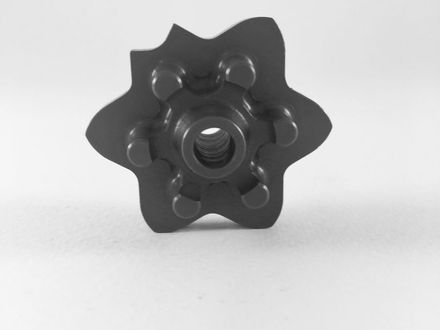
Precision machined engineering component
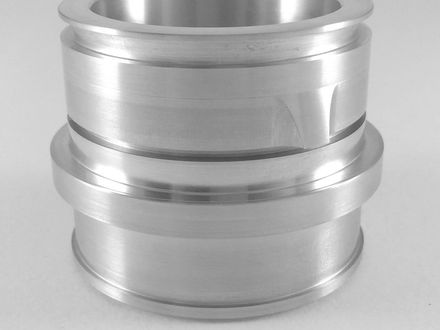
High-performance motorsport component
Quality Assurance
Titanium components demand rigorous inspection. Every part is verified in our temperature-controlled inspection department using CMM and precision hand tools. Our ISO 9001 certified quality system provides full material traceability, Certificates of Conformity and detailed inspection reports as standard. This is particularly important for aerospace and medical clients where documentation is as critical as the component itself.
Our quality systems →Frequently Asked Questions
Why is titanium difficult to CNC machine?
Titanium's low thermal conductivity concentrates heat at the cutting edge, accelerating tool wear. It also work hardens rapidly if cutting parameters are not carefully controlled. These characteristics require specialist tooling, optimised speeds and feeds, and experienced operators. At Clarent Precision, we have years of experience machining titanium and the equipment to handle it consistently.
What titanium grades do you machine?
We machine all common titanium grades including Grade 5 (Ti-6Al-4V), which is the most widely used aerospace titanium alloy. We also work with Grade 2 (commercially pure), Grade 23 (ELI for medical applications) and other grades as required. Contact us to discuss your specific grade requirements.
What tolerances can you achieve on titanium?
We routinely machine titanium to tolerances of +/- 0.01mm on critical dimensions. Achieving tight tolerances on titanium requires careful control of cutting parameters, heat management and fixturing. All critical dimensions are verified by CMM inspection in our temperature-controlled inspection department.
How does titanium CNC machining cost compare to aluminium?
Titanium is significantly more expensive to machine than aluminium due to higher raw material costs, slower cutting speeds and increased tool consumption. However, the performance benefits of titanium (strength, weight savings, corrosion resistance) often justify the additional cost for demanding applications. We provide competitive pricing by optimising our cutting strategies and tool management to minimise waste and maximise efficiency.
Need Titanium Components Machined?
Our super alloy expertise means we deliver titanium components to aerospace-grade tolerances, on time and to specification.