
Stainless Steel CNC Machining
Stainless steel machining for UK medical, pharmaceutical, food and marine customers in 316, 304, 303, 17-4 PH and duplex. We CNC mill and turn stainless parts from one-off prototypes to production batches, with full material traceability and CMM inspection.
Stainless Steel Machining Overview
Stainless steel is one of the most versatile engineering materials, combining excellent corrosion resistance with high strength and durability. It is the material of choice for applications in medical, pharmaceutical, food processing, marine and chemical processing environments where hygiene, cleanliness or resistance to harsh conditions is essential. Choosing between grades? Read our guide to 304 vs 316 stainless steel.
Clarent Precision machines all common grades of stainless steel, with 316 being our most frequently requested. We also regularly work with 304, 303, 17-4 PH and duplex grades. Each grade offers a different balance of corrosion resistance, machinability and mechanical properties, and we are happy to advise on the best selection for your application.
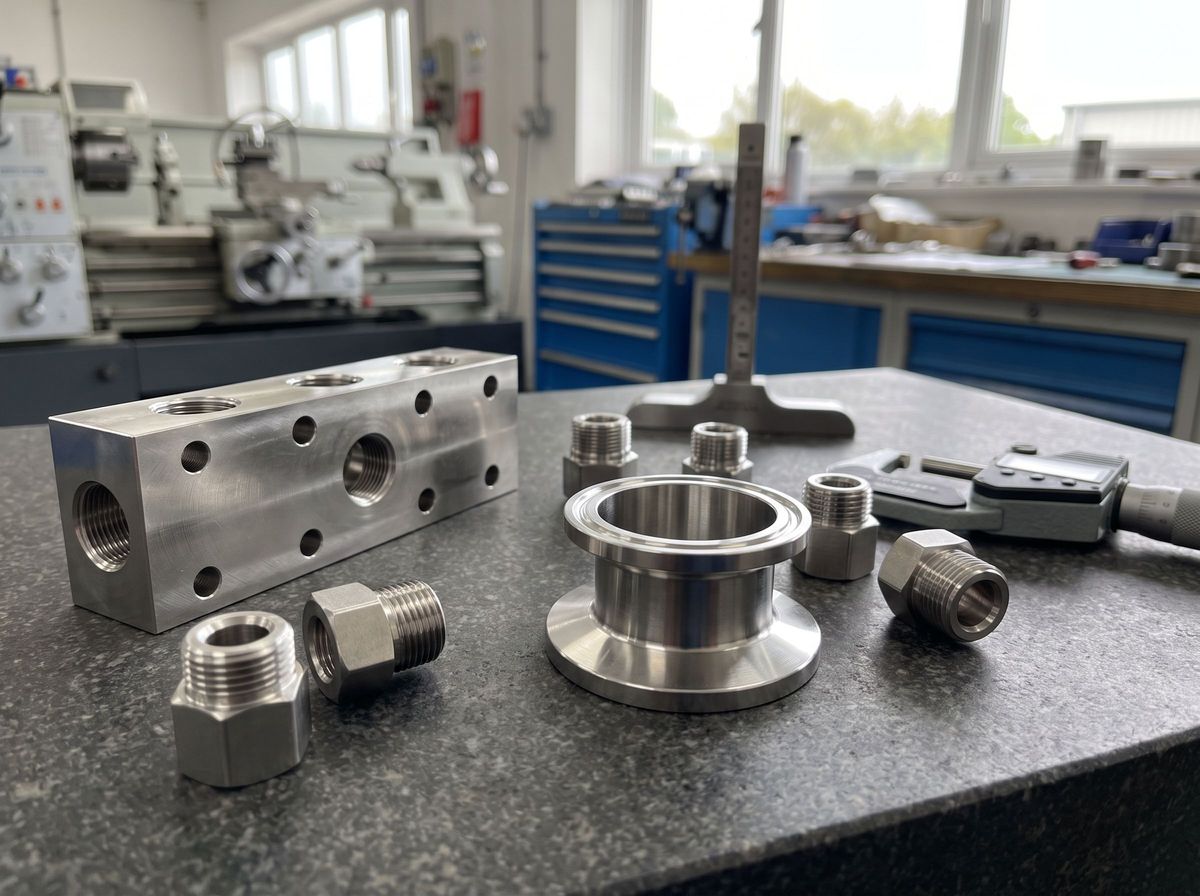
Our CNC milling and turning facility in Leighton Buzzard produces stainless steel components for clients across the medical, pharmaceutical, food and marine sectors. From precision connectors and valve bodies to pharmaceutical closures and instrumentation housings, we have extensive experience with this demanding material group.
Key Properties of Stainless Steel
Corrosion Resistant
Outstanding resistance to rust and staining. 316 grade offers superior resistance in chloride environments.
High Strength
Excellent mechanical strength and hardness, with precipitation hardened grades like 17-4 PH offering even higher performance.
Hygienic
Non-porous surface that is easy to clean and sterilise, making it ideal for medical and food-contact applications.
Durable
Exceptional wear resistance and longevity, even in demanding environments with repeated thermal cycling.
Heat Resistant
Maintains structural integrity at elevated temperatures. Austenitic grades resist scaling up to 870°C.
Biocompatible
316L surgical grade stainless steel is widely used in medical implants and devices due to its biocompatibility.
Our Stainless Steel Machining Capabilities
- CNC Milling: 3 and 4 axis machining centres handling sizes up to 762mm x 406mm x 508mm. Full CAD/CAM simulation for complex geometries.
- CNC Turning: Live tooling lathes for complete mill-turn operations. Capacity up to Ø279mm x 413mm.
- Batch Sizes: From single prototypes to production batches. Milling runs up to 1,000+, turning up to 10,000.
- Tolerances: Routinely achieving +/- 0.01mm on critical features, verified by CMM inspection.
- Grades: 316, 304, 303, 17-4 PH, duplex and others on request.
Applications and Industries
Stainless steel components machined by Clarent Precision serve a wide range of demanding applications.
- Medical devices and surgical instruments
- Pharmaceutical processing equipment and closures
- Food and beverage processing components
- Marine fittings and hardware
- Chemical processing valve bodies and connectors
- Instrumentation housings and enclosures
Post-Production Treatments
We offer a range of finishing options for stainless steel components through our approved sub-contractor network.
- Passivation: Chemical treatment to enhance the natural corrosion resistance of stainless steel.
- Electropolishing: For an ultra-smooth, highly reflective surface finish often required in medical and pharmaceutical applications.
- Plating: Nickel, chrome and other specialist coatings as required.
- Bead blasting: For a consistent matte surface finish.
Stainless Steel Component Examples
A selection of stainless steel components produced at our Leighton Buzzard facility.
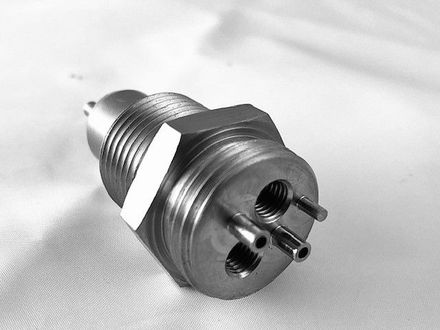
316 stainless steel connector
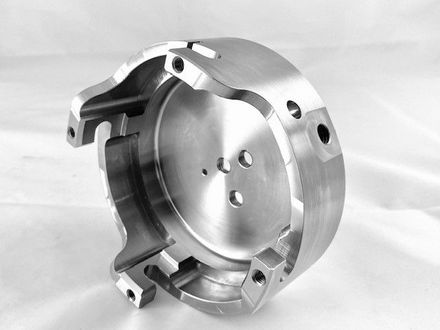
Stainless steel pharmaceutical lid
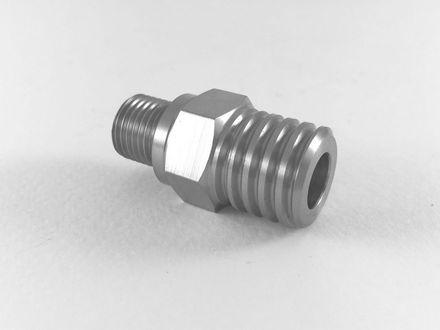
316 stainless steel precision connector
Quality Assurance
Every stainless steel component is inspected in our temperature-controlled inspection department. Our ISO 9001 certified quality management system ensures full traceability from raw material through to finished part. Certificates of Conformity, material certificates and CMM reports are provided as standard.
Our quality systems →Frequently Asked Questions
What grades of stainless steel do you machine?
We machine all common stainless steel grades including 316, 304, 303, 17-4 PH and duplex. Our most frequently machined grade is 316, which offers an excellent combination of corrosion resistance and mechanical strength. If you need a specific grade not listed here, get in touch and we can advise on availability.
What is the difference between 304 and 316 stainless steel?
The key difference is the addition of molybdenum in 316, which gives it significantly better resistance to chloride corrosion and pitting. 316 is the preferred choice for marine, chemical processing and medical applications where exposure to salts or aggressive chemicals is likely. 304 is an excellent general-purpose grade that performs well in less demanding environments and is typically more cost effective.
What tolerances can you achieve on stainless steel?
We routinely machine stainless steel to tolerances of +/- 0.01mm on critical dimensions. While stainless steel is more challenging to machine than aluminium due to its higher hardness and tendency to work harden, our experienced team and high-performance CNC equipment allow us to consistently meet tight tolerances across all grades.
What are your typical lead times for stainless steel components?
Lead times depend on component complexity, batch size and current workshop loading. For straightforward components, we can often deliver within two to three weeks. Urgent requirements can sometimes be accommodated faster. Contact us with your drawings and we will confirm lead times alongside your quotation.
Need Stainless Steel Components Machined?
Send us your drawings for a fast, competitive quote. From medical-grade 316 to high-strength 17-4 PH, we machine it all.