
Delrin & Acetal CNC Machining
Delrin machining for UK engineers who need acetal (POM) gears, bushes, rollers and wear parts held to ±0.02mm. We CNC mill and turn Delrin and acetal copolymer from single prototypes to production batches, with the same ISO 9001 controls as our metal work.
Delrin Machining Overview
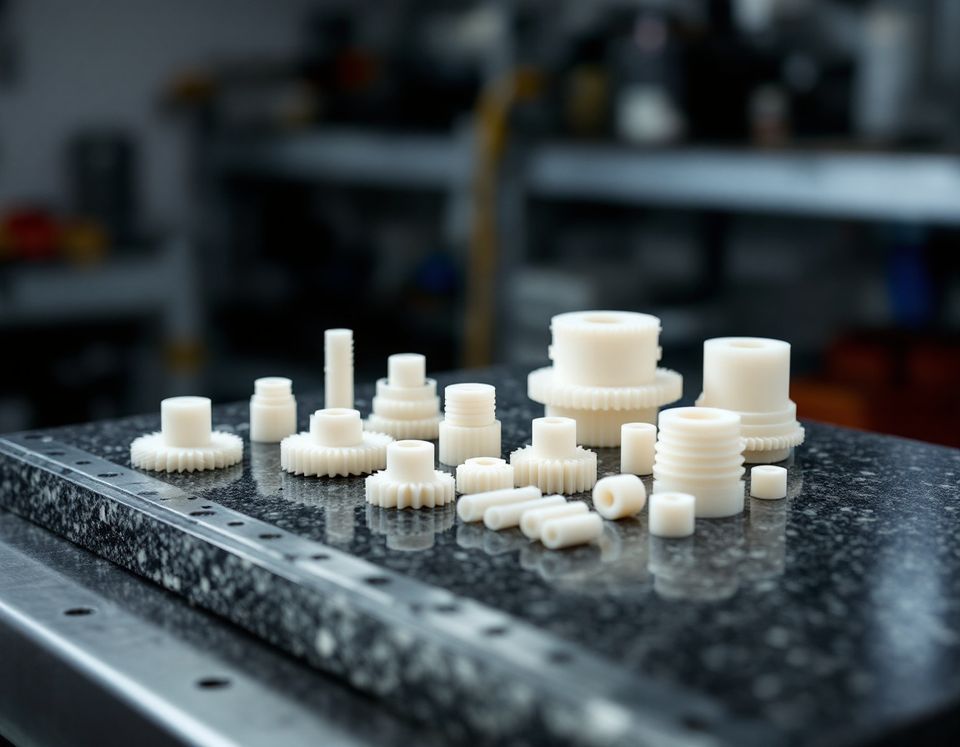
Delrin machining is one of the most frequently requested plastic machining services in UK engineering, and for good reason. Delrin, the brand name for acetal homopolymer (POM), combines excellent dimensional stability, low friction and outstanding machinability, making it the default choice for precision plastic components such as gears, bushes, rollers and wear parts.
Unlike many polymers, Delrin holds tight tolerances reliably. It absorbs very little moisture, machines cleanly with crisp edges and fine surface finishes, and its natural lubricity means components run smoothly against metal counterfaces without additional lubrication. Where Nylon would swell and move, Delrin stays put.
At Clarent Precision, we machine Delrin and acetal on the same CNC milling and turning centres that produce our precision metal components, applying the same ISO 9001 quality controls, CMM inspection and material traceability. From one-off prototypes to production batches, we deliver acetal components that fit first time.
Key Properties of Delrin & Acetal
Dimensional Stability
Very low moisture absorption and excellent creep resistance mean machined Delrin parts hold their dimensions in service, unlike Nylon.
Low Friction
Naturally slippery with a low coefficient of friction, ideal for gears, bushes and sliding components running against metal.
Outstanding Machinability
Cuts cleanly with crisp edges and fine surface finishes. One of the easiest engineering materials to machine to tight tolerances.
Fatigue Resistance
Excellent resistance to repeated loading and spring-back, making it suitable for snap fits, clips and repeatedly stressed parts.
Wear Resistance
Hard-wearing surface stands up to continuous sliding contact, extending service life in bushes, rollers and guide applications.
Chemical Resistance
Good resistance to fuels, oils, solvents and neutral chemicals. Copolymer grades add resistance to hot water and alkalis.
Delrin & Acetal Grades Compared
The right grade depends on whether strength, chemical resistance or the lowest possible friction matters most for your application.
| Grade | Type | Key Characteristics | Typical Applications |
|---|---|---|---|
| Delrin (POM-H) | Acetal homopolymer | Highest strength, stiffness and hardness of the acetal family; excellent fatigue resistance | Gears, bearings, high-load wear parts, precision mechanical components |
| Acetal (POM-C) | Acetal copolymer | Porosity-free; better chemical and hot water resistance; slightly lower mechanicals than homopolymer | Food machinery parts, fluid handling, general precision engineering |
| Delrin AF | PTFE-filled homopolymer | Self-lubricating with the lowest friction of any acetal; runs dry against metal | Sliding wear parts, dry-running bushes, low-friction guides |
Food-contact compliant and glass-filled grades are available on request.
What Matters When Machining Delrin
Delrin is famously easy to machine, but producing precision acetal components still demands the right approach.
- Sharp tooling: Sharp, positive-rake tools produce the clean shearing cut that gives Delrin its characteristic crisp edges and fine finish. Dull tooling generates heat and smearing.
- Heat management: Acetal has a relatively low melting point, so speeds, feeds and coolant strategy are managed to keep cutting temperatures down and prevent dimensional movement.
- Stress relief: For components with tight flatness or parallelism requirements, machining in stages allows internal stresses in the stock material to release without pulling the finished part out of tolerance.
- Workholding: Plastics deflect under clamping force more than metals. Fixturing is planned so thin walls and delicate features are supported without distortion.
These considerations are second nature to our team. The same discipline we apply to super alloys is applied to precision plastics.
Our Delrin Machining Capabilities
- CNC Milling: 3 and 4 axis machining centres with tooling and parameters optimised for plastics. Sizes up to 762mm x 406mm x 508mm.
- CNC Turning: Live tooling lathes for complete mill-turn operations. Capacity up to Ø279mm x 413mm.
- Batch Sizes: From single prototypes to production batches. Milling runs up to 1,000+, turning up to 10,000.
- Tolerances: Approaching +/- 0.02mm on critical features thanks to Delrin's dimensional stability, verified by CMM inspection.
- Materials: Delrin (POM-H), acetal copolymer (POM-C), Delrin AF and food-contact grades in natural and black.
Applications and Industries
Machined Delrin and acetal components appear wherever precision, low friction and reliability matter.
- Gears, racks and drive components
- Bushes, bearings, rollers and guide wheels
- Food processing and packaging machinery change parts
- Pharmaceutical production machinery guides and wear parts
- Medical device and laboratory instrument components
- Electrical insulators and housings
- Jigs, fixtures and prototype mechanisms
Machined Plastic Component Examples
Examples of precision machined polymer components produced at our Leighton Buzzard facility.
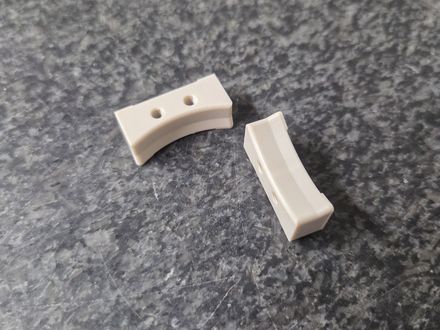
Precision machined polymer components
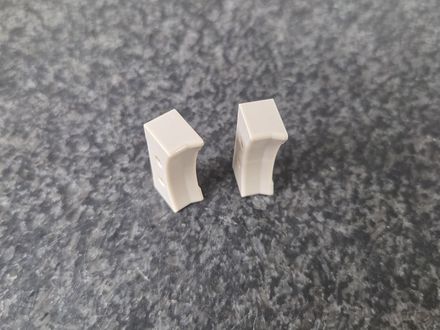
Machined plastic components on inspection granite
Quality Assurance
Every Delrin component is inspected in our temperature-controlled inspection department, particularly important for plastics, where thermal expansion can mask dimensional errors. Our ISO 9001 certified quality system provides material traceability, Certificates of Conformity and CMM dimensional reports on request.
Our quality systems →Delrin Machining FAQs
Is Delrin the same as acetal?
Almost. Delrin is DuPont’s brand name for acetal homopolymer (POM-H), while "acetal" also covers the copolymer version (POM-C). In practice the names are used interchangeably. The homopolymer offers slightly higher strength and stiffness, while the copolymer has better chemical and hot water resistance and is free of centreline porosity. We machine both and can advise which suits your application.
What is the difference between Delrin and Nylon?
Delrin has significantly better dimensional stability and much lower moisture absorption than Nylon, which makes it the better choice for precision components that must hold tight tolerances. It also machines more cleanly and has a lower coefficient of friction. Nylon is tougher, more abrasion resistant and usually cheaper, but it absorbs moisture and can change dimension over time. For precision parts, Delrin is normally the right call.
What tolerances can you hold on machined Delrin parts?
Delrin is one of the most dimensionally stable engineering plastics, which is why it is the machinist’s favourite polymer. While typical plastic machining tolerances are around ±0.05mm, we can approach ±0.02mm on critical Delrin features. For components with tight flatness requirements, stress-relieving between operations helps ensure parts stay in tolerance after machining.
Is Delrin food safe?
Food-contact compliant grades of Delrin and acetal are widely available, and natural (white) acetal is a standard choice for food processing and packaging machinery parts. If your component requires food contact compliance, specify this when you request a quote and we will source certified material with the supporting documentation.
Why CNC machine Delrin rather than injection mould or 3D print it?
CNC machining needs no tooling investment, so it is faster and far cheaper than moulding for prototypes and low-to-medium volumes, and it achieves tighter tolerances and better surface finishes than 3D printing. Machined parts are also cut from extruded stock with consistent, certified material properties. Injection moulding only becomes economical at high volumes where tooling costs can be amortised.
Is Delrin easy to machine?
Delrin is one of the easiest engineering materials to machine, which is why machinists reach for it whenever the application allows. It cuts cleanly with crisp edges, breaks chips well and holds dimensions reliably. The two things to respect are heat, because acetal has a low melting point and will smear if tools are dull or speeds are wrong, and clamping force, since plastics deflect more readily than metals.
What tooling do you use for machining Delrin?
Sharp, positive-rake tooling with polished flutes works best. We favour two or three flute end mills with generous chip clearance so material evacuates rather than re-cutting and melting, and carbide holds an edge far longer than HSS on production runs. Tools kept for plastics stay sharper than tools shared with steel work, and that sharpness is what produces the clean edges Delrin is known for.
How much does Delrin machining cost?
Delrin is one of the most cost-effective engineering plastics to machine. Stock material is inexpensive compared with high-performance polymers like PEEK, and its excellent machinability means fast cycle times. The final cost depends on component geometry, tolerances and batch size. Send us your drawings for a fast, competitive quotation.
Need Delrin Components Machined?
From one-off prototypes to production batches of gears, bushes and wear parts. Send us your drawings for a fast quote.