
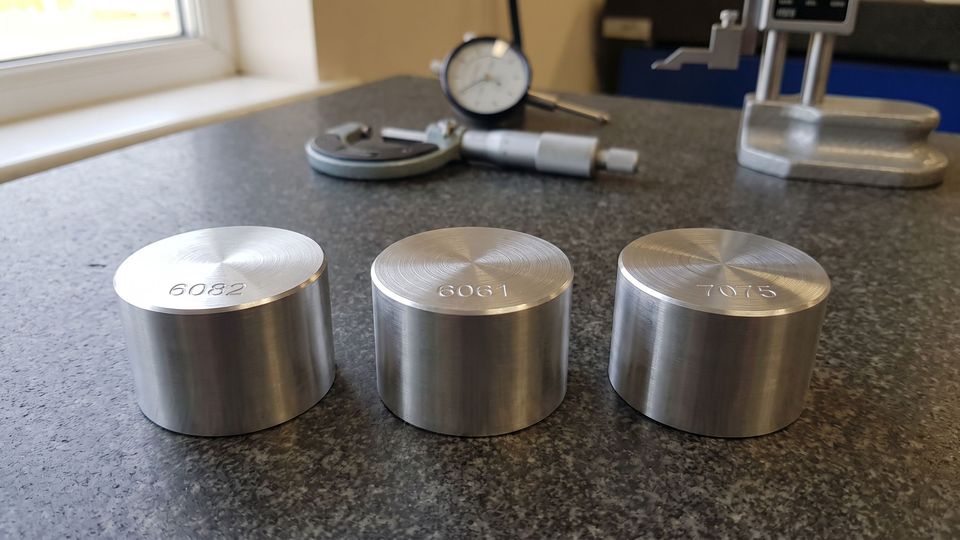
For most machined parts in the UK, 6082-T6 is the right aluminium. It is the standard stock grade, it machines cleanly and it is slightly stronger than 6061, which is its American counterpart.
Choose 6061 when a drawing or customer specification calls for it. Pay for 7075 only when the part genuinely needs close to twice the strength, because it costs more, cannot be welded and needs anodising to survive outdoors.
We machine all three at our aluminium machining workshop in Leighton Buzzard, from one-off prototypes to production runs. This is how the grades compare once they are on the machine, not just on the datasheet.
The Quick Comparison
| 6082-T6 | 6061-T6 | 7075-T6 / T651 | |
|---|---|---|---|
| Alloy family | Al-Mg-Si (6xxx) | Al-Mg-Si (6xxx) | Al-Zn-Mg-Cu (7xxx) |
| Other names | EN AW-6082, AlSi1MgMn, H30 (HE30) | EN AW-6061, AlMg1SiCu, H20 | EN AW-7075, AlZn5.5MgCu |
| Typical tensile strength | 310 to 340 MPa | Around 310 MPa | 510 to 570 MPa |
| Typical yield strength | 260 to 310 MPa | 240 to 275 MPa | 430 to 500 MPa |
| Density | 2.71 g/cm³ | 2.70 g/cm³ | 2.81 g/cm³ |
| Machinability (T6) | Good, clean chips | Good, near identical to 6082 | Excellent, best finish off the tool |
| Weldability | Good | Good | Poor, not for fusion welding |
| Corrosion resistance | Very good | Very good | Moderate, anodise for outdoor use |
| UK availability | Standard stock in bar and plate | Stocked, in fewer sizes | Mainly T651 plate and T6 bar |
| Relative material cost | Lowest | Similar to 6082 | Roughly 1.5 to 3 times 6082 |
The headline is simple. 6082 and 6061 are near twins, and 7075 is in a different strength class altogether.
6082 vs 6061, Near Twins With Different Passports
6082 and 6061 are both magnesium-silicon alloys, solution treated and artificially aged to the T6 temper. For the majority of machined parts they are interchangeable on strength, machinability and corrosion resistance.
The difference is manganese. 6082 carries 0.4 to 1.0% of it, which refines the grain structure and gives it a slightly higher guaranteed strength, particularly in thicker sections.
The other difference is geography. 6082 is the European standard grade and the default in UK bar and plate stock, while 6061 is the American standard and turns up on drawings from US parent companies and their supply chains.
Older UK drawings often call these grades by their British Standard names. HE30 or H30 means 6082, and H20 means 6061.
When a Drawing Says 6061
If a drawing specifies 6061, we machine 6061. We never substitute a grade without asking.
What we do is flag it at quote stage when 6082 would be cheaper or quicker to source in the size needed. Many customers are happy to approve 6082 once they know, but aerospace and approved-supplier work usually has to stay on the specified grade.
Where 7075 Earns Its Price
7075 is a zinc-based alloy, and in the T651 plate condition it reaches around 570 MPa tensile and 500 MPa yield. That is close to twice the yield strength of 6082, for only about 4% more weight.
It earns its place on highly stressed, weight-critical parts. Typical uses include motorsport uprights and suspension brackets, aerospace fittings, and jigs and mould tooling where stiffness and a polished finish matter.
It comes with three catches that the strength figures hide.
- It cannot be fusion welded. The weld zone cracks and loses most of its strength, so 7075 parts are bolted or bonded, never welded.
- Its corrosion resistance is lower. Bare 7075 will mark and pit outdoors far sooner than 6082, so it is almost always anodised.
- T6 is prone to stress corrosion cracking. Under sustained tensile stress in a damp environment, the T73 temper trades some strength for much better resistance, as the 7075 alloy reference notes.
If none of those matter for your part and the strength does, 7075 is a superb material to work with.
How Each Grade Machines
This is the part the supplier comparisons skip. In the T6 temper, all three grades machine well, but they do not behave the same.
6082 and 6061
At T6, both cut cleanly with sharp, polished carbide and produce manageable chips. We would not change a cutting strategy between them.
Temper matters far more than grade. Supplied in the O or T4 condition, both become soft and gummy, smear on the cutter and build up on the edge, so always confirm the temper on the certificate.
7075
7075 is harder, and that makes it better at the spindle, not worse. Chips break short and clean, burrs are smaller and the surface finish straight off the tool is the best of the three.
It also holds thin walls and fine threads more reliably, because it resists the deflection and tearing that softer grades show. Tool wear is slightly higher, but nowhere near enough to matter on cycle time.
Distortion on Heavily Pocketed Parts
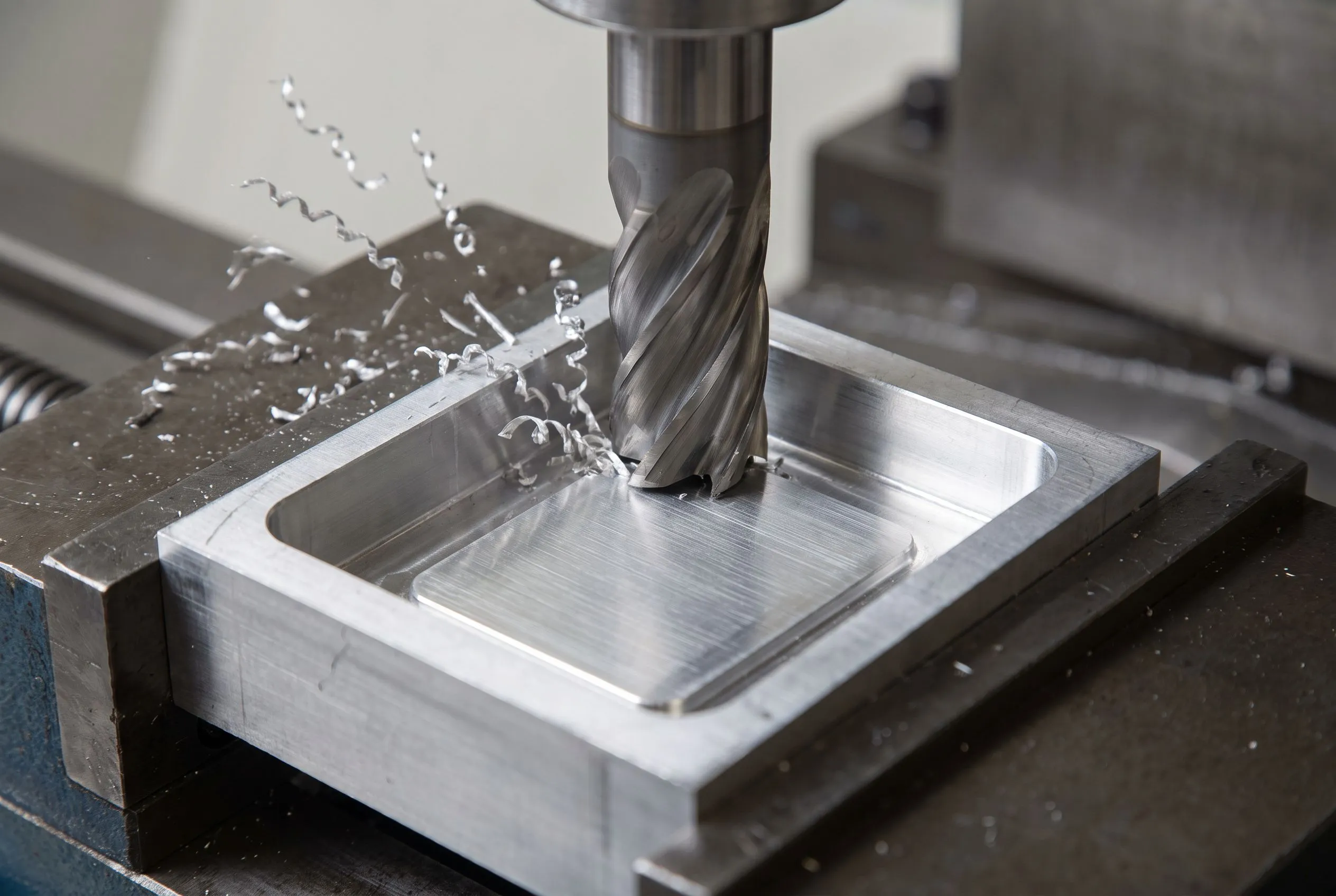
Grade affects flatness less than product form does. Extruded 6082-T6 bar carries residual stress from the extrusion and quench, and when you remove most of the material it can move.
Plate in the T651 condition has been stretched after quenching to relieve that stress, so it stays much flatter. For heavily pocketed parts, specify T651 plate in whichever grade you choose, and allow for a roughing pass with the part released before finishing to final size.
Anodising and Finishing
Both 6xxx grades take clear and coloured anodising well, which is one reason 6082 is the default for enclosures, brackets and visible parts. They also take hard anodising for wear surfaces.
7075 hard anodises well, but clear and dyed finishes come out darker and less even than on 6xxx grades. Mixing 6082 and 7075 parts in one assembly and expecting a colour match is a mistake to avoid.
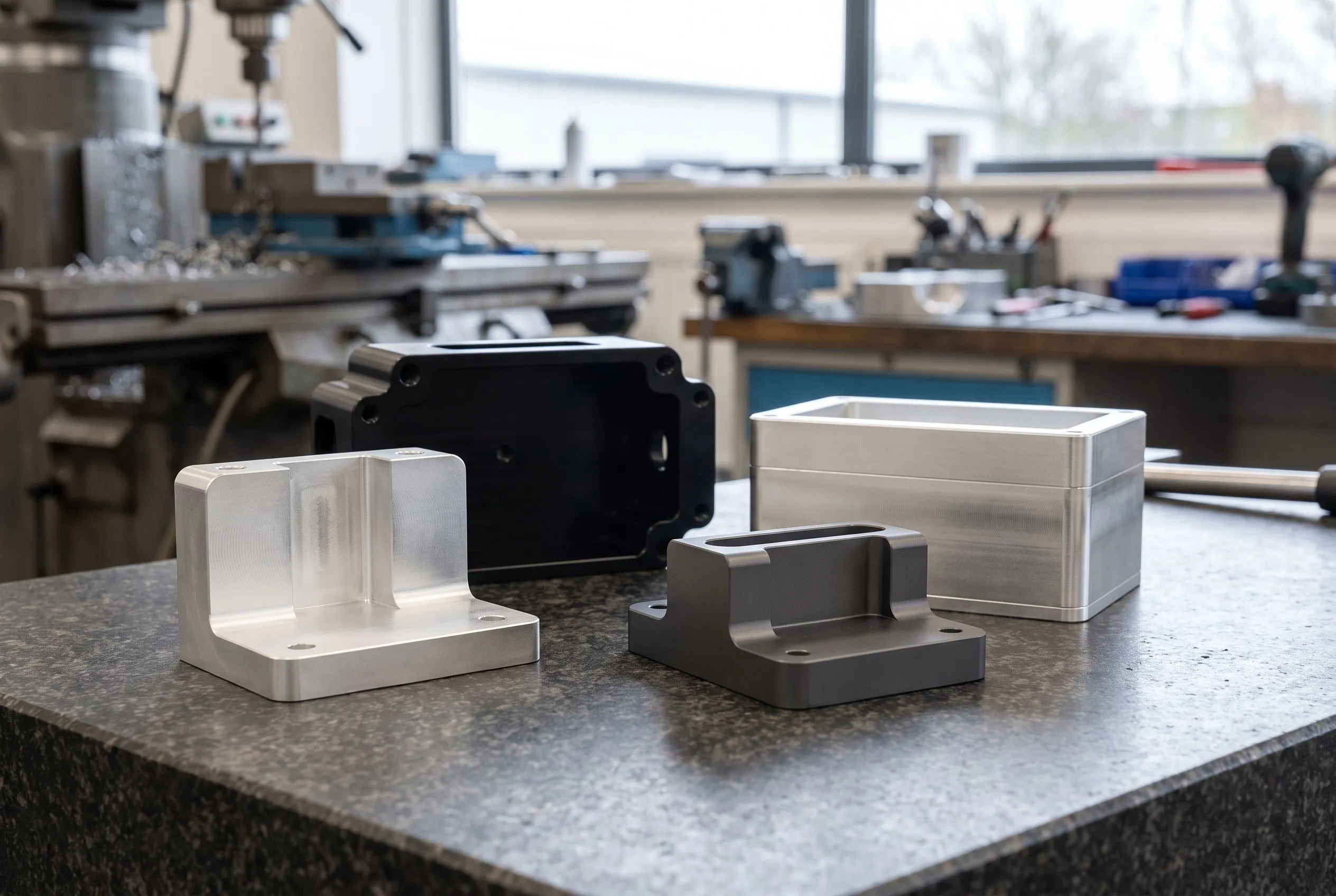
We arrange anodising, hard anodising and other finishes through approved sub-contractors as part of our post-production treatments, so the finished part arrives ready to fit.
Cost and Availability
6082 is the cheapest of the three and the easiest to find in the UK in almost any bar diameter or plate thickness. 6061 costs about the same per kilogram, but less common sizes can carry a premium or a longer lead time because fewer UK stockists hold them.
7075 typically costs somewhere between one and a half and three times as much per kilogram as 6082, depending on form and size. Cycle times are similar across the grades, so the difference in part price comes mostly from material and any finishing.
On a small part that gap is often trivial. On a large billet part, where material is most of the cost, it decides the grade, and our guide to CNC machining costs explains how that feeds into a quote.
Which Grade Should You Choose?
The decision usually comes down to four questions.
- Is there a specified grade? If a drawing or approval names a grade, use it. Ask before substituting.
- Does the part need to be welded? Then use 6082 or 6061, and allow for reduced strength around the weld.
- Is the part highly stressed or weight-critical? Use 7075-T651, anodise it, and consider T73 if it will carry sustained load in a damp environment.
- None of the above? Use 6082-T6, or 6082-T651 plate for heavily pocketed parts.
That last answer covers most of the aluminium parts we make. For one-off parts and development work, the same choices apply to prototype CNC machining, and it is worth prototyping in the production grade.
Getting Aluminium Parts Machined
Send us your drawings or 3D models along with how the part will be used. We will confirm the grade and temper make sense before quoting, and flag where a different grade would save money without costing performance.
Every aluminium part is machined with full material traceability and CMM inspection on critical dimensions.