
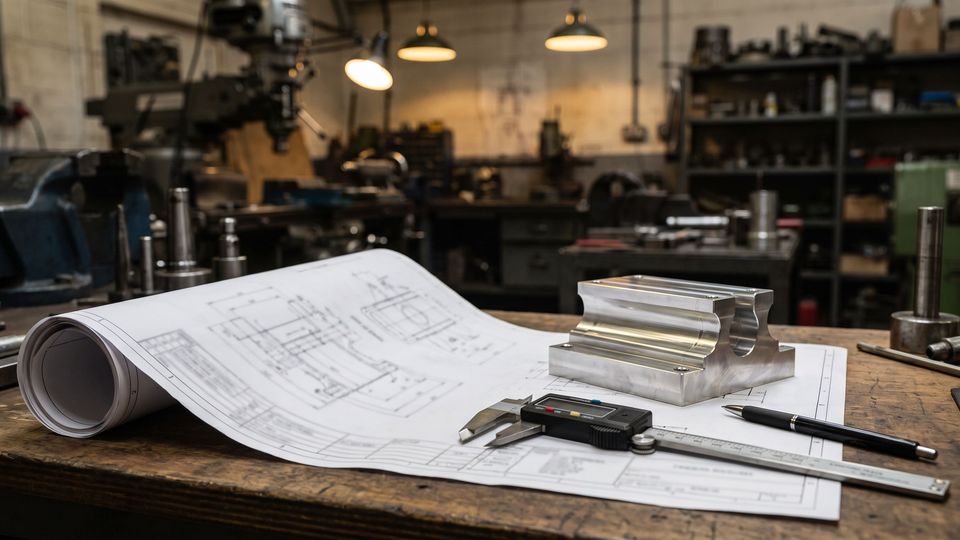
CNC machining in the UK is priced per part, not per hour, and the honest answer to what it costs is a range so wide it needs explaining. The same 50mm aluminium component might cost £300 as a one-off and £30 each in a batch of fifty, and swapping that aluminium for Inconel could multiply either number several times over.
Published UK machine-hour rates run from roughly £25 to £120 depending on the machine and the work. But nobody buys machine hours, so this guide covers what actually drives the price of your part and what you can do about it.
We quote machining work every day at our subcontract machining facility in Leighton Buzzard, from one-off prototypes to 10,000-piece production runs. This is how those quotes are built.
What Goes Into a CNC Machining Quote
Every machining quote is the sum of six things:
- Material: the bar or billet, plus how much of it ends up as swarf
- Machine time: cycle time multiplied by the machine’s hourly rate
- Setup and programming: fixed costs incurred before the first chip is cut
- Inspection: from standard checks to full CMM reports and FAIR documentation
- Finishing: anodising, plating, heat treatment or polishing where specified
- Delivery: packaging and carriage
The first item scales with quantity. The third does not, and that difference explains most of the surprises people get when comparing quotes.
The Batch Size Effect
Setup and programming might represent a few hours of work before a single part is made. On a one-off, that entire cost lands on one component.
Order fifty and the same fixed cost is spread fifty ways. This is why a part quoted at £300 as a one-off can drop to £30 each at batch quantities, a pattern you will see across every UK machine shop.
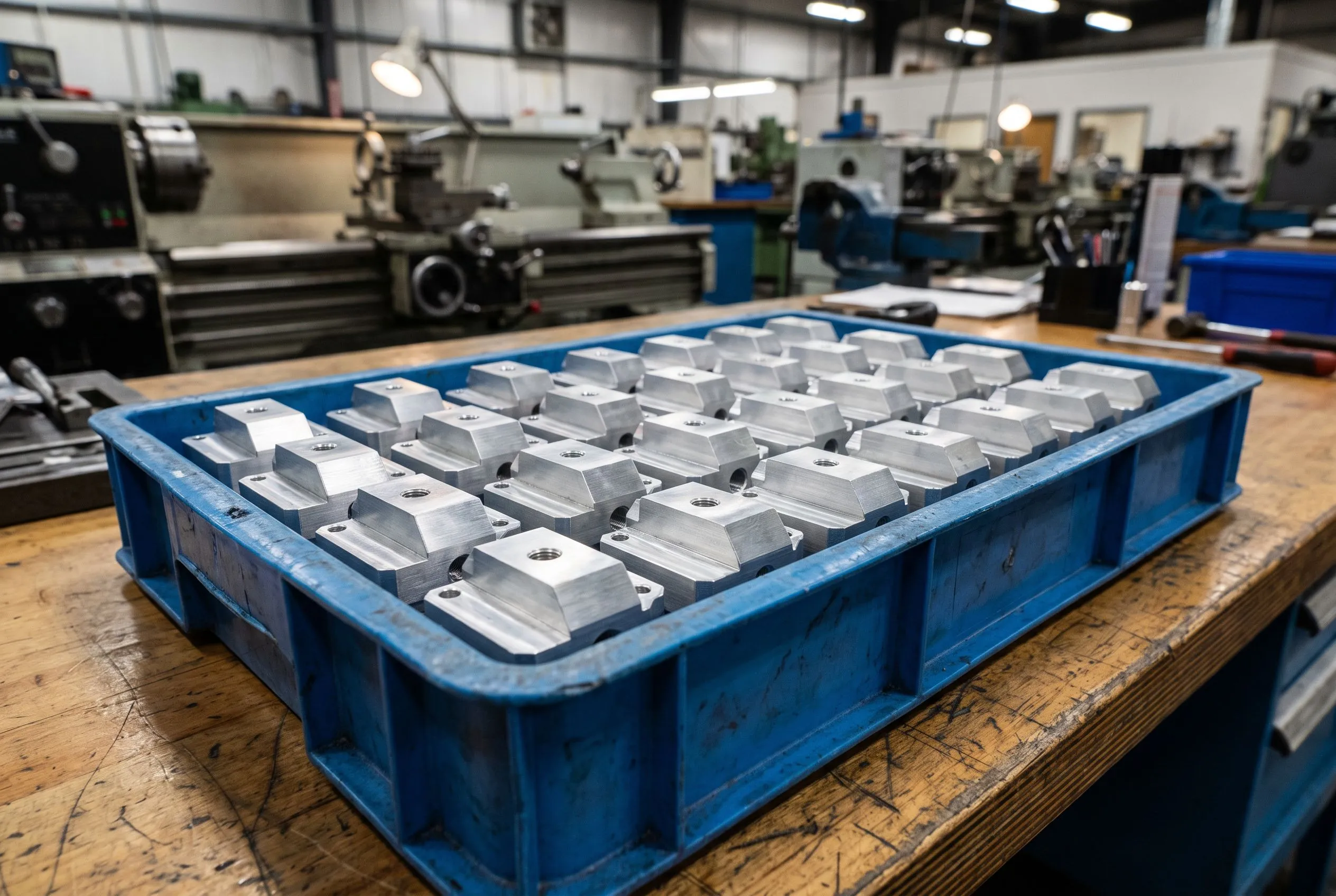
It also means there is a smart middle path. Our stockholding service lets you order a full batch at batch pricing, then call parts off as you need them, so you get the low unit price without holding the stock yourself.
Material Choice Moves the Price More Than Anything
Material affects cost twice: once in the price of the stock, and again in how fast it can be cut.
Free-cutting aluminium and brass sit at the cheap end on both counts. Stainless steel costs more per kilogram and machines slower. The exotic end is a different world entirely.
As super alloy specialists, we machine a lot of Inconel and Hastelloy, and the cost difference deserves explaining because it surprises first-time buyers. The raw material costs many times more than aluminium, cutting speeds drop to a fraction of aluminium rates, and tool wear accelerates sharply, so the same geometry can cost several times as much in a nickel super alloy.
None of that is padding. It is physics, and a shop that machines these alloys regularly will still quote them tighter than one that rarely touches them, because proven cutting strategies waste less time and fewer tools.
Tolerances and Complexity
Every tolerance tighter than the part needs adds cost. Holding ±0.01mm means slower feeds, more careful workholding and more inspection time than holding ±0.1mm.
Geometry works the same way. Deep narrow pockets need long fragile tools run gently. Sharp internal corners need smaller cutters and more passes. A part that needs machining from five sides needs multiple setups, and every setup adds handling, fixturing and risk.
The expensive features are usually easy to spot on a drawing. Whether they are all necessary is a conversation worth having, and it is one we start during quoting rather than after.
Typical UK Price Behaviour
Treat these as patterns rather than a price list, because geometry dominates everything:
| Scenario | Typical behaviour |
|---|---|
| Simple aluminium part, one-off | Low hundreds of pounds |
| Same part, batch of 50+ | Falls to tens of pounds each |
| Same part in stainless steel | Roughly 30 to 60% above the aluminium price |
| Same part in Inconel or Hastelloy | Several times the aluminium price |
| Tight tolerances (±0.01mm) with CMM reports | Adds inspection and cycle time at any quantity |
| Urgent turnaround | Premium for schedule disruption |
If a quote comes back far below this pattern, check what has been left out. Inspection scope, material certification, finishing and delivery are the usual gaps, and they do not disappear, they just arrive later as extras.
How to Reduce the Cost of Machined Parts
Most savings are designed in, not negotiated. The changes that consistently cut prices at the quoting stage:
- Relax non-critical tolerances. Tolerance everything to function, not habit.
- Open up internal corners. A 6mm corner radius machines far faster than a 2mm one.
- Avoid deep, narrow features where the design allows.
- Design around standard stock sizes so less material is bought and cut away.
- Batch sensibly. Even 10-off instead of 2-off changes the unit price meaningfully.
- Send the 3D model (STEP, IGES or Parasolid) with the 2D drawing. It cuts programming time and quoting guesswork.
For a one-off, prototype machining with a manufacturing review often pays for itself: we flag the expensive features before you commit the design to production.
Comparing Quotes Fairly
The cheapest number on the page is not always the cheapest part on your goods-in bench. Before comparing quotes, check each one covers the same scope:
- Material grade stated, with certification if you need it
- Inspection scope defined (standard checks, CMM report, FAIR?)
- Finishing included or excluded
- Delivery and packaging included
- Lead time realistic rather than optimistic
A transparent quote makes its assumptions visible. Ours arrive within 24 to 48 hours of receiving drawings, priced from CAD/CAM simulation of the actual cycle rather than guesswork, whether that is for CNC milling or CNC turning.
Getting a Number for Your Part
General ranges only go so far, because your geometry, material and quantity set the real price.
Send us your drawings or 3D models and you will have an accurate quote within a day or two, with the cost drivers explained rather than hidden. If the design has features that are quietly expensive, we will tell you, along with what changing them would save.